
Baliem Valley, Papua's Mountain Paradise with Vast Expanses of White Sand.

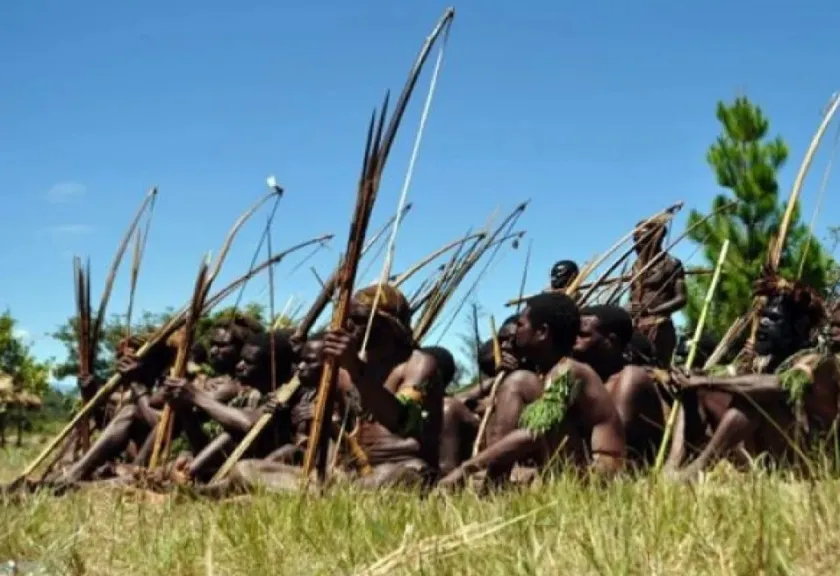
Source: Antara Foto/Iwan Adisaputra
When talking about tourist destinations in eastern Indonesia, most people immediately think of Raja Ampat, Banda Neira, Kei Islands, or Mount Jayawijaya. However, Highland Papua also holds a hidden tourism gem that offers a distinct experience: Baliem Valley.
Located at an altitude of around 1,600 meters above sea level, Baliem Valley offers cool mountain air, stunning panoramic landscapes, and well-preserved cultural heritage. One of the most unique attractions of this region is a vast expanse of white sand situated right in the middle of the mountain valley, not along a coastline.
Baliem Valley delivers a combined experience of nature, history, and cultural tourism within a single visit.
READ ALSO
Wellness Tourism is growing in popularity, Indonesia aims to become a leading destination in Southeast Asia.
K-Pop Concerts Become a Tourism Magnet, Indonesia's Ministry of Tourism Promotes Concert Tourism Packages Across the Country
Ministry of Tourism's Efforts to Strengthen Belitung's Competitiveness as a Leading Destination
White Sand In The Heart Of The Mountains
One must-visit location when in Baliem Valley is Aikima Village White Sand, situated just a short distance from Wamena Town. The trip to this site only takes approximately 15 minutes by motor vehicle.
At first glance, this white sand field resembles a beach. The difference is there are no crashing waves or shoreline. Instead, visitors can enjoy views of rolling green hills that surround the entire area.
The uniqueness of Aikima Village White Sand is tied to the geological history of Baliem Valley. This entire region was once a giant ancient lake. A massive earthquake that occurred in the 19th century caused tectonic plate shifts, draining the lake and forming the valley that exists today.
Coral rock deposits found across the sand expanse are the natural geological traces remaining from this event.
Getting To Know The Dani Community
No visit to Baliem Valley is complete without learning about the Dani Tribe, one of the oldest indigenous peoples that inhabit this region.
For centuries, the Dani people have maintained their ancestral traditions while living in harmony with nature. They utilize natural resources responsibly, and hold deeply to the values of community, honesty, and hard work.
In daily life, Dani men generally work as farmers with sweet potato as their staple food. Meanwhile, women hold central roles both in caring for the household and sustaining family livelihoods.
The Iconic Honai Traditional House
Another signature icon of Baliem Valley is the Honai, the traditional dwelling of the Dani, Lani, and Yali peoples.
This round-shaped house with thatched roofing is specially designed to withstand cold mountain temperatures that drop between 10 to 15 degrees Celsius at night. Beyond functioning as housing, the Honai stands as a symbol of collective unity and protection.
In 2016, the Ministry of Education and Culture officially designated the Honai as an Intangible Cultural Heritage of Indonesia.
Pigs Hold High Social Meaning
In Baliem Valley, pigs are not merely livestock, but a symbol of honour and prosperity.
For indigenous highland Papuan communities, pig ownership directly reflects an individual's social status.
Even pig tusks, locally called Yake, are commonly worn as part of traditional male attire as they represent courage, life achievements, and personal dignity.
The Symbolic Stone Burning Tradition
The Stone Burning tradition is one of the most famous cultural attractions in Highland Papua.
This ceremony is held for occasions including weddings, births, thanksgiving celebrations, and other customary events. Stones are heated until glowing red, then used to cook various foods such as tubers and meat.
Far more than just a cooking method, the Stone Burning tradition carries core philosophies of gratitude, unity, and peace.
It is believed that the fire does not only cook the food, but also dissolves differences and strengthens bonds between community members.
Centuries-Old Mummification Tradition
Not many people know Indonesia also has indigenous mummification practices. Several well-preserved mummies from the Dani Tribe, estimated to be around 300 years old, still remain in Baliem Valley.
One of the most famous is the mummy of war chief Wim Matok Mabel, which is believed to be over 370 years old.
These mummies are located across several areas including Kurulu, Assologima District, and Kurima.
Globally Recognized Baliem Valley Cultural Festival
The allure of Baliem Valley is further completed by the Baliem Valley Cultural Festival, which has been held regularly since 1989.
This festival brings together the indigenous Dani, Lani, and Yali communities to showcase various traditions: from traditional dances, pikon mouth harp performances, to folk games that portray daily life in Highland Papua.
The 34th Baliem Valley Cultural Festival is scheduled to be held on 7–10 August 2026. Unlike previous editions, the mock war battles that long served as the festival's iconic attraction will be replaced with socio-drama performances telling real life stories of Baliem Valley indigenous communities.
Alongside cultural performances, visitors can also enjoy the Wamena Coffee Street, Noken Street, and a closing Cultural Carnival as part of the festival programme. (Ministry of Tourism)










Belum ada komentar. Jadilah yang pertama!