
Forgotten Gem: Tambora is Being Advocated for Recognition as a UNESCO Global Geopark

Source: Antara/Ady Ardiansah
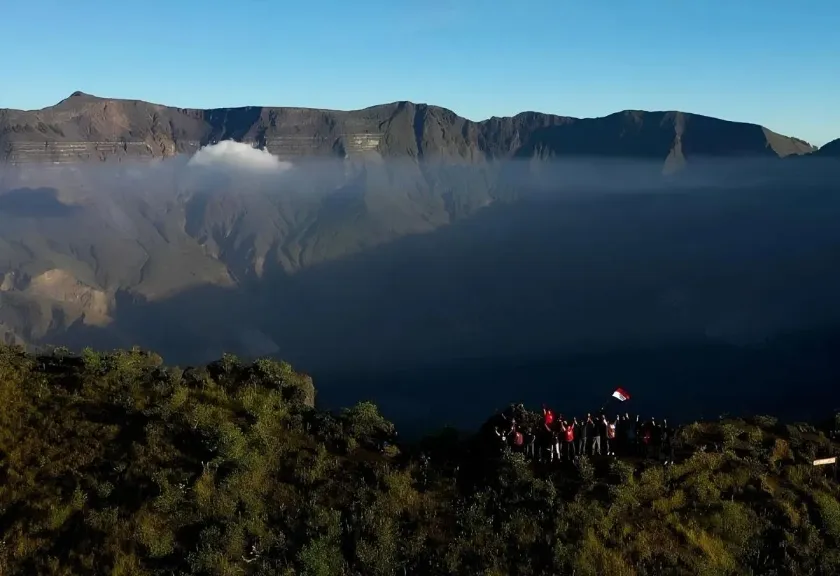
West Nusa Tenggara (NTB) is taking major strides to elevate Mount Tambora onto the global stage as a UNESCO Global Geopark. Behind this initiative, the regional government positions Environmental Conservation not as an afterthought, but as the core foundation for developing the Sustainable Tourism area.
Governor Lalu Muhamad Iqbal emphasized that one key priority is the protection of Saleh Bay, which serves as the main buffer for the Tambora Geopark's ecosystems and biodiversity. This marine area is also recognised as a critical whale shark habitat, a major draw for ecotourism.
"We already have proven experience managing geoparks as hubs for Environmental Conservation, geological preservation, and Community Empowerment," stated Iqbal in Mataram on Thursday.
READ ALSO
Sianok Canyon Targets UNESCO Global Geopark Status: West Sumatra to the World
Mount Tambora Climbing Temporarily Closed, Safety Is the Reason
Raja Ampat Focuses on Maintaining UNESCO Global Geopark Status for 2026
Efforts to secure UNESCO recognition do not stop at the local level. The NTB government presented the Tambora Geopark nomination before UNESCO panellists via virtual meeting on Wednesday, 13 May, marking a critical milestone in the long process towards official UNESCO Global Geopark status.
Miq Iqbal was accompanied during the presentation by NTB Regional Development Planning Agency Secretary Baiq Yunita Puji Widiani, Tambora Geopark Management Agency General Manager Makdis Sari, and Rinjani UNESCO Global Geopark General Manager Qwadru P. Wicaksono.
Experience operating the Rinjani UNESCO Global Geopark acts as a valuable asset for NTB. Regional officials confirmed they are not starting from scratch, but building upon internationally recognised best practices for geopark governance.
According to Iqbal, Mount Tambora is a "forgotten gem". This region holds extraordinary value spanning geology, history, culture, and biodiversity that has yet to be fully known to the world.
Unlike Mount Rinjani which is famous as a hiking Tourism Destination, Tambora carries a far more dramatic global story. Its catastrophic 1815 eruption is recorded as one of the largest volcanic events in modern human history.
This eruption did not only reshape the island of Sumbawa, but its impacts reached as far as Europe, triggering the global climate event known as The Year Without Summer after volcanic ash spread across Earth's atmosphere.
"Tambora is not just a Volcano. It is an integral part of world history," stressed Miq Iqbal.
The Tambora Geopark covers three major cultural regions: Bima, Dompu, and Sumbawa. All three areas play a central role in advancing community-led Conservation, while also safeguarding living local cultural traditions.
From an ecological perspective, Tambora lies east of the Wallace Line, an area recognised globally for its extremely high biodiversity.
At least 275 species have been documented within the geopark so far, though the actual total is believed to be much higher. Many of these species are classified as threatened, primarily due to deforestation and illegal human activity.
"That is why conservation is absolutely non-negotiable for the development of this area," he explained.
One concrete measure being implemented is strengthened protection for Saleh Bay. This effort is vital not only for marine ecosystem health, but also for the long-term viability of nature-based Tourism in Sumbawa. The NTB government has stressed that all development in the area will be aligned with environmental preservation.
"Conservation is not an add-on to development. It is the core foundation upon which this region will be developed," he affirmed.
Meanwhile, Tambora Geopark Management Agency General Manager Makdis Sari stated that Tambora holds outstanding universal value as a critical global geological heritage site.
"Tambora is more than just a volcano. It is a living archive of a geological event that altered the course of human history," she noted.
Traces of the 1815 eruption remain observable today through scientific, geological, and cultural evidence, establishing this region as an invaluable site for global scientific research as well as an educational nature-based Tourism Destination.










Belum ada komentar. Jadilah yang pertama!