
Labuan Bajo's Challenge: Preserving Komodo Habitat Amid Tourist Surge

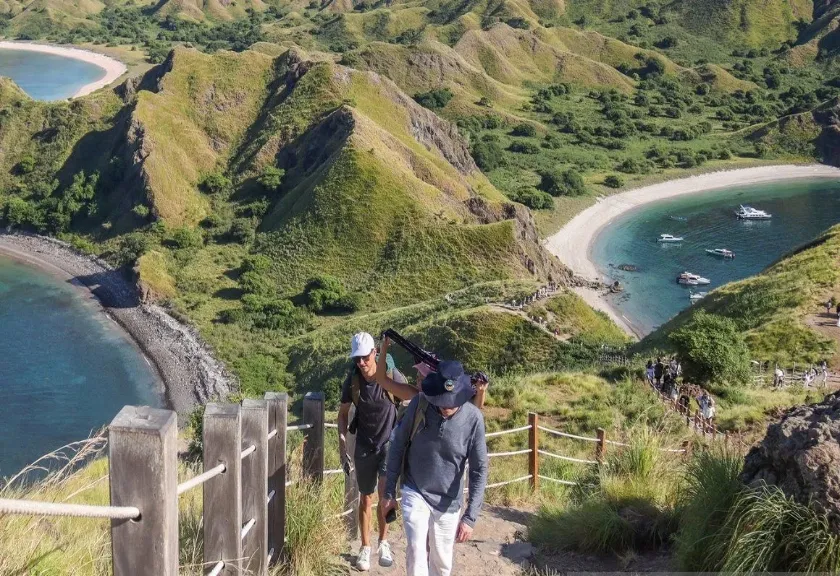
Source: Antara Foto/Gecio Viana
Amidst Flores' volcanic landscapes and blue seas, Komodo stands as a living symbol of nature's balance with tourism. Behind the rising tourist influx to Komodo National Park, the government is strengthening Conservation approaches, positioning this ancient species at the heart of sustainability strategies.
The Ministry of Tourism emphasizes that preservation efforts now extend beyond maintaining tourist appeal to ensuring ecosystem integrity amid mounting visitation pressures.
“The Ministry of Tourism consistently fosters cross-sector collaboration with the Ministry of Forestry—particularly the Komodo National Park management authority—local governments, and tourism businesses to ensure all activities operate within sustainable frameworks,” stated the Ministry in a written response to Antara.
READ ALSO
K-Pop Concerts Become a Tourism Magnet, Indonesia's Ministry of Tourism Promotes Concert Tourism Packages Across the Country
Ministry of Tourism's Efforts to Strengthen Belitung's Competitiveness as a Leading Destination
Targeting the Chinese Market, Indonesia's Tourism Promotion Generates Potential Transaction Value of IDR 109 Billion
Through modern Conservation perspectives, Komodo dragons are no longer viewed merely as Indonesia's iconic attraction but as core ecological assets determining regional ecosystem balance. Current tourism development policies prioritize habitat protection above all.
This approach materializes through conservation-based tourism models, balancing economic needs with environmental carrying capacity.
Tourist education forms a critical component, fostering awareness about responsible interactions with wildlife and nature.
Meanwhile, local communities surrounding the park are positioned as key ecotourism actors—not just participants in Tourism Economics but direct guardians of the Komodo ecosystem.
Conservation measures include field management practices like restricting activities in sensitive zones (including diving) and elevating area cleanliness standards. These steps aim to preserve environmental quality while sustaining tourism experiences.
Long-term strategies involve optimizing Non-Tax State Revenue (PNBP) as crucial funding for conservation—strengthening habitat protection, enhancing facilities, and ensuring comprehensive destination sustainability.
Ecosystem pressure is reflected in BPS data from Manggarai Barat Dalam Angka 2026: 432,217 Tourist Visits to Komodo National Park in 2025 (approximately 1,180–1,200 daily). Peak seasons (July-August) see daily visitors exceeding 2,000.
“This indicates visitation pressure at specific times/locations but doesn’t reflect year-round Overtourism,” clarified the Tourism Ministry.
Though not classified as Overtourism overall, the critical challenge remains concentrated visitation at particular sites and periods. This necessitates redistributing tourism flows evenly to reduce core-area pressure without stifling local economic growth.
Aligned with BPS and the Labuan Bajo-Flores Integrated Tourism Master Plan, the government is developing carrying capacity-based management systems. This includes visitation controls, timed-entry regulations, plus buffer-zone and Alternative Destination development.










Belum ada komentar. Jadilah yang pertama!