
Whale Sharks Become Miang Island's Main Highlight, East Kalimantan's New Ecotourism Magnet.

Source: Pokdarwis Pulau Miang
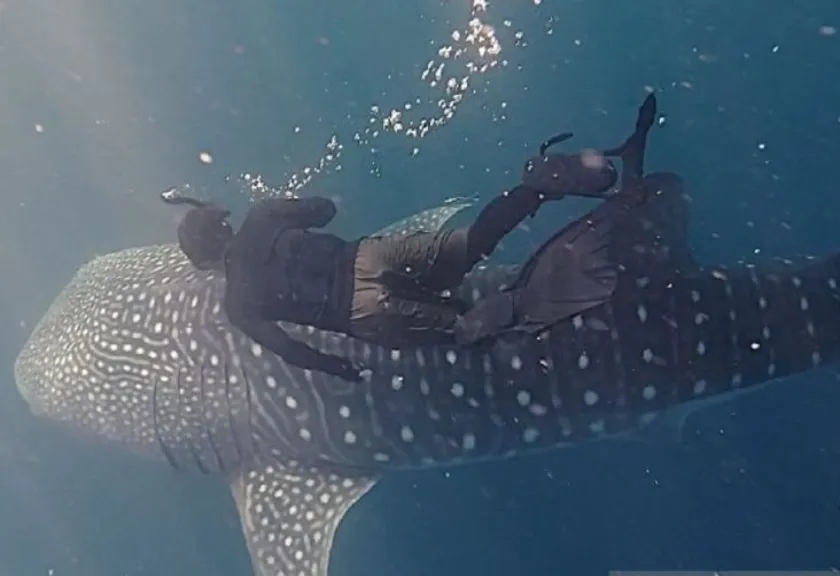
East Kalimantan is developing marine tourism destinations that combine natural beauty with environmental conservation efforts. The appearance of whale sharks in the waters of Miang Island, East Kutai Regency is being optimized as the main ecotourism attraction.
Beyond just offering the experience of diving alongside the world's largest fish, tourism development on Miang Island is also designed to improve coastal community welfare without sacrificing marine ecosystem preservation.
Muhammad Faisal, Head of the East Kalimantan Tourism Office, stated that whale shark sightings have become a new draw for tourists seeking a unique marine tourism experience.
READ ALSO
Viral Advertisement for the Sale of Katang Island on Social Media, Riau Islands Provincial Government Steps In
East Kutai Lom Plai Festival Wins KEN 2026, Enchanting Dayak Wehea Tradition Captivates
Guaranteed Legality, Kolaka Prepares 6 Exotic Islands for Marine Tourism Investment
"This human-friendly marine mammal has become a major tourism magnet for Miang Island, East Kutai," Faisal remarked in Samarinda.
The government is committed to ensuring that growing visitor numbers will not disrupt the natural habitat of whale sharks, nor the underwater biodiversity that has long made Miang Island appealing.
As an initial measure, authorities are conducting mapping work to identify whale shark appearance patterns in these waters. This data will later form the basis for regulating tourist visit schedules, to enable safe and organized diving activities.
"Mapping the locations and timing of whale shark sightings is critically important. This will allow us to structure diving visit schedules properly and guarantee safety for all parties," Faisal explained.
Observations conducted alongside local tourism awareness groups recorded approximately four individual whale sharks active around Miang Island. The presence of these animals complements the charm of this area, which is already renowned for its coral reefs and extraordinary marine biodiversity.
The government is also drafting Standard Operating Procedures (SOPs) to govern tourist interactions with whale sharks, created to maintain balance between tourism development and conservation efforts.
"We are continuing to develop strict standard operating procedures to ensure that every form of tourist interaction will not disturb the natural habitat of these animals in any way," he added.
This SOP drafting process is carried out through consultation with regional authorities and marine experts, to ensure all tourism activities will always prioritize the safety of both wildlife and visitors.
Alongside conservation efforts, this ecotourism development is also intended to deliver economic benefits for local communities. Coastal residents are being supported to take central roles as tourism service providers, working as local guides or operating residential homestay accommodation.
"Empowering coastal communities as the primary tourism service providers is the critical foundation for building sustainable, self-reliant village economies," he concluded.








Belum ada komentar. Jadilah yang pertama!