
Reverse Homecoming in China: Youth Invite Parents to Their Cities for Chinese New Year

Source: Antara/Xinhua/Yang Suping
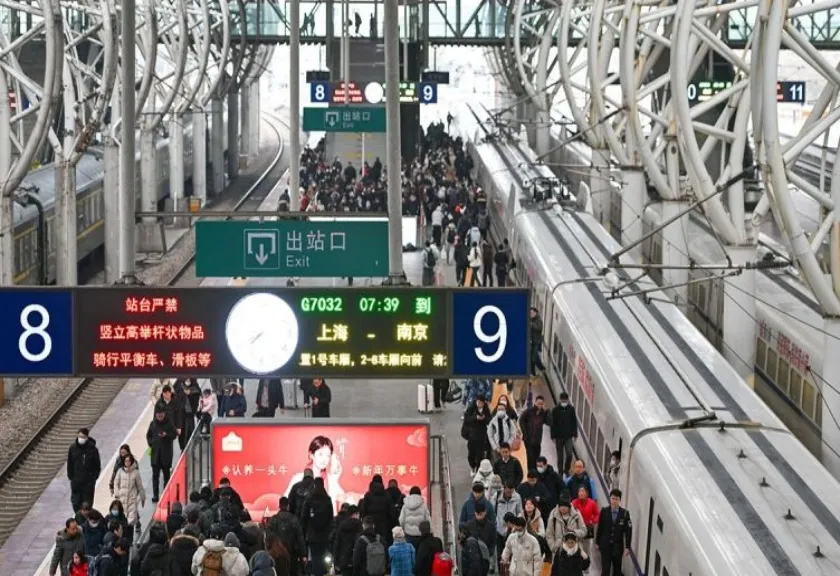
Amid the world's largest annual migration wave, a new pattern is gradually altering Travel directions. For decades, Chinese New Year meant millions of Chinese citizens returning to their hometowns. Now, more Young Generation are inviting their parents to the cities where they migrated.
This phenomenon, known as fanxiang guonian or Reverse Homecoming, is gaining popularity among China's youth. Behind this directional shift lie stories of urbanization, travel efficiency, and a redefinition of home.
Data from Meituan Travel, a popular online ticket platform in China, shows sales for Flight Tickets for reverse homecoming in 2026 increased by 84 percent compared to 2025. Beijing, Shanghai, and Chengdu became the primary destinations during the Chinese New Year Holiday.
READ ALSO
Celebrate the Year of the Fire Horse: The Most Exciting and Free CNY Spots in Depok
Chinese New Year Holiday More Exciting! Special Programs at Prambanan and Borobudur
Explore Jakarta: Chinese New Year Long Weekend Getaway Picks from Festivals, Runs, to Light Attractions
These figures aren't mere statistics but reflect a cultural shift in travel behavior.
Other data indicates a significant rise in Air Travel among citizens aged 60 during this year's Lunar New Year holiday.
Their destinations were major cities like Beijing (up 40 percent), Chengdu (up 31 percent), Tianjin (up 30 percent), and Guangzhou (27 percent).
Large airports, typically crowded with young workers, now also welcome seniors with suitcases and family traditions heading to modern city apartments.
Major Cities Become Celebration Stages
Several major Chinese cities are organizing activities for residents not returning home and accommodating reverse homecoming visitors during the Lunar New Year holiday.
Shanghai will host over 2,000 cultural and Tourism activities. Meanwhile, Beijing will hold events like lantern festivals, cultural performances, and bazaars at 26 different locations.
The Lunar New Year, once intimately celebrated in villages, now unfolds grandly in metropolitan centers, with red lanterns illuminating skyscrapers and cultural performances filling urban public spaces.
Going Viral on Social Media
This phenomenon is bustling not only at terminals and airports but also in the digital realm. Topics related to reverse homecoming on Weibo reached 2.2 million views on Monday, February 9, 2026.
On the Xiaohongshu platform, users shared experiences of bringing their parents to their adopted cities for reverse homecoming.
A Xiaohongshu user from Henan working in Shenzhen shared her Story of inviting her parents for reverse homecoming to her work city. She stated this saved travel, accommodation, and consumption expenses.
Another platform user mentioned reverse homecoming is easier as it avoids ticket-buying rushes, exhausting long journeys, and visiting multiple relatives' homes.
Amid transport congestion and ticket price surges during the homecoming season, comfort becomes both a rational and emotional consideration.
More Than Just Efficiency
According to Chinese government media, Hu Jiliang, Deputy Director of the Economic Research Center at Central China Normal University, stated the reverse homecoming trend fosters better understanding between parents and children living away from home. It also boosts urban spending.
This means reverse homecoming isn't merely a cost-saving strategy but creates space for intergenerational dialogue in urban environments.
Parents can directly witness their children's work rhythms. Meanwhile, children introduce the new world that shapes their daily reality.
Amid 9.5 Billion Journeys
Homecoming is a vital tradition in China's Lunar New Year celebrations.
During the 2026 Lunar New Year travel period, an estimated 9.5 billion passenger journeys occurred in China. This includes 540 million railway trips and 95 million air journeys.
Within this massive figure, reverse homecoming may still be a small fraction of the overall travel flow.
Yet it marks a symbolic directional change: home no longer solely means the native village, but also the city where dreams are built.
In China's ever-evolving modern landscape, Lunar New Year remains about family. Only now, families reunite in high-rise Shanghai apartments, Shenzhen's tech districts, or amidst Beijing's lantern festivals.
Traditions endure, even when the journey reverses direction.(Xinhua)










Belum ada komentar. Jadilah yang pertama!