
Restoration of Mount Ciremai Forest Ecosystem Becomes Foundation for Sustainable Nature Tourism

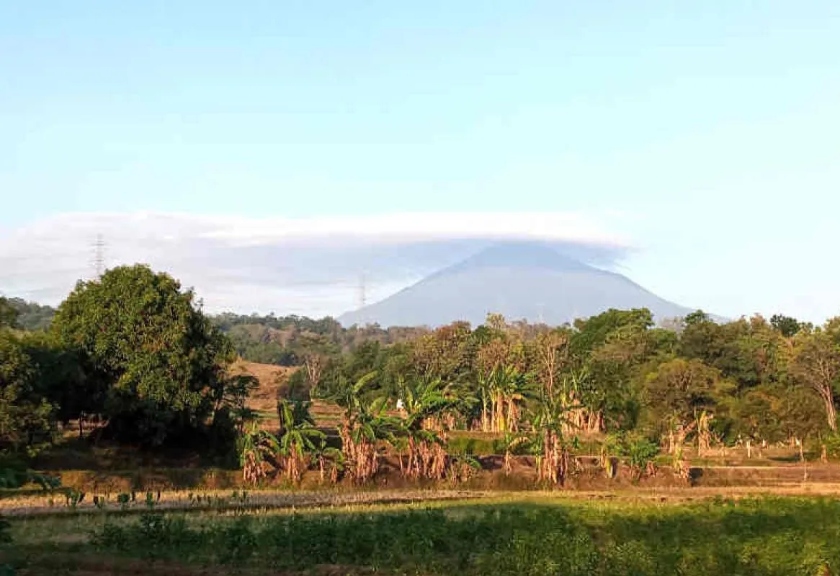
Source: Antara/Khaerul Izan
On the slopes of Mount Ciremai, the forest is not just a backdrop for hiking and Nature Tourism, but also a living space continuously being restored. Behind the hiking trails and mountain landscapes that attract tourists, the Mount Ciremai National Park Office (BTNGC) in West Java is carrying out a process of Sustainable Ecosystem restoration.
BTNGC asserts that forest rehabilitation activities in Mount Ciremai are ongoing, while also refuting claims suggesting a lack of Ecosystem Restoration efforts. The management of this Conservation area is, in fact, a long-term endeavor whose results are not always immediately visible.
The Head of the National Park Management Section (PTN) for Region 2 of TNGC Halu Oleo in Kuningan responded to information questioning forest rehabilitation. According to him, this information does not match field conditions and does not reflect the management activities that have been carried out.
READ ALSO
Tourist Visits Increase, Tourism Supports Banyuwangi's Economic Growth.
Awesome! Bandung Ranks Among Asia's Top 5 Travel Destinations
Off the Beaten Track: The World's 7 Most Beautiful Green Destinations.
“The facts exist; even until now, we continue planting (conducting area rehabilitation),” he stated.
Currently, over 100 hectares of land within the Mount Ciremai National Park area are in the Ecosystem Restoration phase.
This process is carried out through planting and vegetation maintenance activities tailored to the characteristics of the mountain landscape, making rehabilitation a layered work requiring time and consistency.
The greening program was not designed as a short-term project. Forest restoration is part of the long-term area management agenda, including drafting an ecosystem restoration plan for 2026.
This step is expected to strengthen land cover while maintaining the ecological function of Mount Ciremai as a Conservation area.
“Our future plan is to continue this so that land cover improves further,” he said.
Improving land cover quality has become increasingly crucial since Mount Ciremai's status changed from production forest to national park.
This shift has brought consequences for the perspective on the forest—from an economic resource to an ecosystem whose sustainability must be safeguarded.
Beyond technical aspects, BTNGC also encourages a shift in the mindset of communities surrounding the area.
The goal is for conservation management to achieve a balance BETWEEN environmental protection and social needs, especially for residents living directly adjacent to the forest.
In management practice, TNGC prioritizes three main pillars: protection, preservation, and sustainable utilization.
These three pillars are implemented by involving communities around the area to ensure conservation is not one-sided.
“In protection, the community is involved through Forest Police Partners and Fire Care Communities for area patrols,” he explained.
Community involvement also includes nursery work, planting, and maintaining plants resulting from rehabilitation.
One example of such partnership operates in the Cipeuteuy area, Majalengka Regency, through collaboration with the Cipeuteuy Cooperative in protecting springs and vegetation that support surrounding life.
In the context of Nature Tourism, the TNGC Office applies a precautionary principle, including in handling trees potentially hazardous to visitors.
This approach affirms that tourist safety goes hand in hand with efforts to maintain the forest ecosystem's balance.
“Conservation remains the core of our management, but we also want communities around the area to grow independently and empowered,” he concluded.









Belum ada komentar. Jadilah yang pertama!