
Whirlpool in Komodo National Park Waters, a Stunning Yet Dangerous Natural Phenomenon

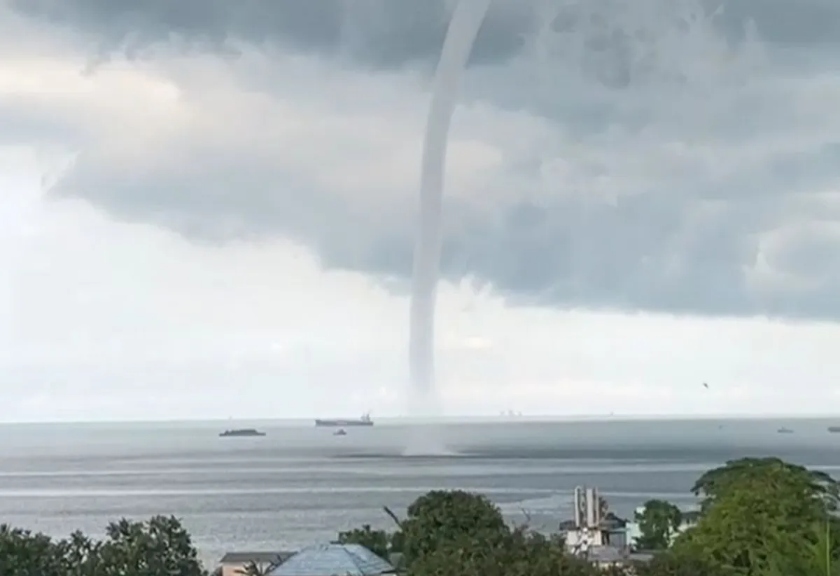
Source: Antaranews/Head Office/WhatsApp Group
The Whirlpool phenomenon in the waters of Komodo National Park, East Nusa Tenggara (NTT) became a social media sensation since Wednesday, January 14, 2026. The footage showing swirling currents was captured by a local fisherman and shared by Tourism operator Budi Widjaja via his Facebook account.
For many, Komodo National Park evokes images of savanna landscapes, dramatic hills, and of course komodo dragons. Yet its waters harbor equally spectacular and sometimes unexpected natural dynamics.
What Is a Whirlpool?
READ ALSO
Top 3 Most Visited Tourist Destinations in East Sumba Throughout 2025
Kemiren Osing Village Joins UN Tourism World Tourism Network
Indonesia Targets Australian Tourists Through BBTF 2026, With Culinary Tourism As Its Flagship Leading Attraction.
As explained by Live Science, ocean and river currents are dynamic and ever-changing. Whirlpools form when opposing currents collide.
Since neither flow can penetrate the other at equal speed, water is forced into a rotating motion, coiling around itself to create a vortex.
Meanwhile, Nautical Channel describes whirlpools as circulating currents triggered by complex interactions BETWEEN water temperature, salinity, tidal dynamics, and geological conditions. Their sizes vary significantly—some last mere seconds while others persist for centuries.
Most vortices remain small, but some can evolve into large, legendary phenomena.
At extreme scales, whirlpools become maelstroms—deadly vortices with powerful suction. Norway's Maelstrom stands as one of Earth's strongest whirlpools.
Why Do Whirlpools Occur?
Per Nautical Channel, several factors trigger whirlpool formation. Primary causes include clashing ocean currents from opposite directions that initiate circular motion. Wind also contributes by dragging surface water to start vortices.
Additionally, tidal movements in narrow waterways like straits or submarine canyons often create intense turbulence leading to whirlpools.
Geological phenomena—including tectonic shifts and seafloor structures—play significant roles, particularly in deep waters.
In regions like Komodo National Park, converging currents from the Indian Ocean and Flores Sea, combined with complex underwater topography, create ideal conditions for whirlpools.
Global Whirlpool Varieties
Surface whirlpools appear most frequently, identifiable by swirling foam or debris patterns. Typically under 20 meters wide, these pose risks to swimmers and small vessels.
Deep-sea whirlpools form far below the surface, driven by seafloor geology and deep current dynamics. Though invisible, their power affects submarine navigation and seafloor sedimentation while distributing nutrients in deep-sea ecosystems.
Large-scale oceanic turbulence constitutes a third type—massive vortices within global current systems like the Gulf Stream. Spanning hundreds of kilometers, these regulate Earth's climate balance.
Whirlpools present not only stunning visuals but also serious maritime hazards. Their swirling currents can destabilize vessels and complicate navigation, especially for smaller boats.







Belum ada komentar. Jadilah yang pertama!