
Badshahi Mosque, Lahore's Iconic Red Legend Standing Timeless

Source: Wikipedia
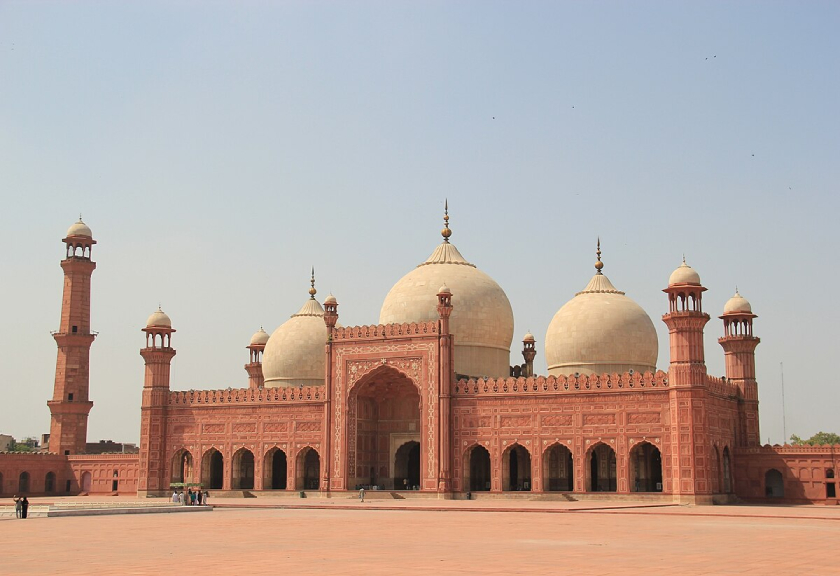
In the heart of Old Lahore, where the dust of history and the bustle of modern life intertwine, stands a masterpiece that has watched over Punjab for over three centuries – the Badshahi Mosque, the largest Mughal mosque ever built in Pakistan. With majestic domes, blazing red terracotta struck by sunlight, and an endless courtyard resembling a stone ocean, this mosque is not merely a place of worship but an imperial declaration of Mughal glory, art, and identity.
Built when South Asia was the epicenter of Islamic architectural grandeur, the Badshahi Mosque remains a living testament that aesthetic perfection can transcend time.
Mughal Architecture Like Poetry in Stone
READ ALSO
Ramadan Trip: 5 Aesthetic Mosques in West Java for Religious Tourism Spots
2026 Ramadan Tourism Trends: Iftar Hiking to Muslim World's Nocturnal Cities
Global Muslim Travel Index 2026: West Java Becomes the Most Promising Muslim-Friendly Travel Destination
Constructed in 1671 AD by Mughal Emperor Aurangzeb, it became the largest monument erected during his reign. Its beauty lies not only in scale but in the detail and symmetry where two key Mughal architectural elements achieved their purest expression.
Four 60-meter minarets soar from each mosque corner, while three white marble domes float like gentle wave crests above the main prayer hall. Every surface is clad in red sandstone – a signature of late Mughal work – creating dramatic color shifts as sunlight traverses the sky.
The mosque accommodates up to 100,000 worshippers within its 276,000-square-foot courtyard, ranking among the world’s largest mosque courtyards. Standing at its center, the distance from end to end feels like crossing a royal plaza.
Opulence Forged for Power
The Badshahi Mosque was built not solely for spirituality, but as a dynastic symbol of supremacy. Aurangzeb’s Lahore anchored vital Asian trade routes, and this mosque projected Mughal authority across that strategic territory.
Its facade bursts with floral carvings, elegant calligraphy, and geometric patterns blending Persian and Central Asian influences – architectural legacies brought to India since Akbar’s era.
Historical accounts note its grandeur made it a premier destination for global travelers seeking spiritual encounters alongside classical Islamic architecture in South Asia.
The Grandest Terrace, Infinite Narratives
Few mosques worldwide offer spatial immersion like Badshahi. Its expansive courtyard creates a unique perspectival sensation, as if standing in an open arena celebrating God’s magnificence and humanity’s power to craft beauty.
On the courtyard’s northern edge lies access to Lahore Fort – another Mughal relic forming Pakistan’s most iconic cultural-historical landscape.
Badshahi Mosque in Modern History
From the 18th century through early 1900s, it weathered pivotal transitions: serving as foreign military headquarters, undergoing British colonial renovations, then reemerging as a religious landmark after Pakistan’s independence.
Today, Badshahi Mosque functions not just as a house of worship but as a cultural hub, religious tourism destination, and symbol of Pakistani national identity. Illuminated nightly in pink and golden-yellow light, it ranks among South Asia’s most photogenic sites.
Three-and-a-half centuries after its cornerstone was laid, Badshahi Mosque remains a headline in Mughal civilization’s narrative. Between echoing azan calls across Lahore’s skies and colossal architectural shadows draping its courtyard, it reminds us that beauty, spirituality, and cultural power coexist in timeless harmony.
For travelers, history aficionados, and architecture devotees, Badshahi Mosque offers more than breathtaking vistas – it delivers an experience that sends us home carrying stories.









Belum ada komentar. Jadilah yang pertama!