
Palestine Protects Archaeological Sites From Threats, Tourism Made Part of the Strategy

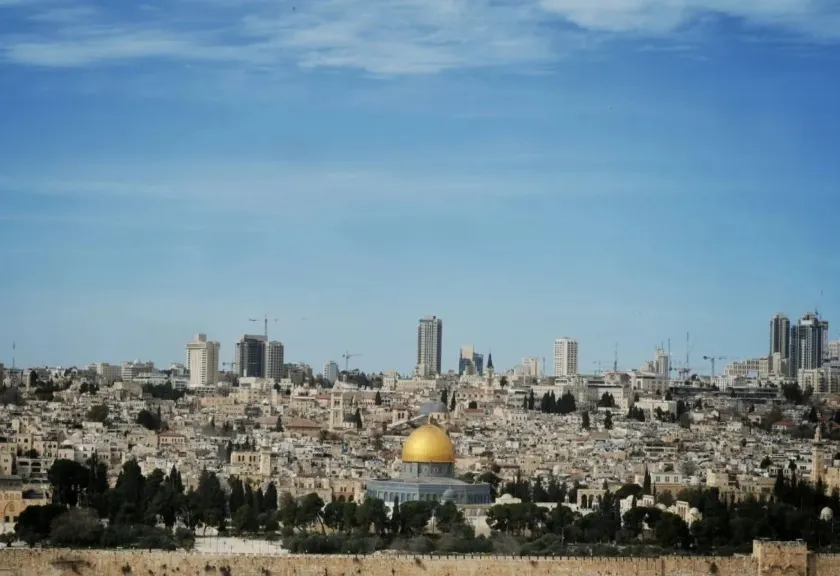
Source: Antara Foto/Muhammad Adimaja
Amid the rolling hill landscapes of Hebron, a number of archaeological sites hold the long unfolding history of Palestine. For local authorities, these heritage remains are not merely old structures or traces of the past, but a critical component of national identity that must be maintained and protected.
Palestinian Minister of Tourism and Antiquities Hani Al-Hayek emphasized the importance of strengthening national efforts to oversee and safeguard all archaeological and historical sites across the territory.
This message was delivered by Al-Hayek during an inspection tour of historical and archaeological sites in Al-Karmel, Yatta, and Beit 'Amra, Hebron Governorate, Palestine on Saturday, 8 August.
READ ALSO
Yellow Tram: The Timeless Tourism Icon of Lisbon City
The only one from Indonesia, Jakarta's House of Tugu Makes World’s Greatest Places 2026.
Borobudur Moon: Celebrating Cultural Radiance Under the Full Moon
During the visit, Al-Hayek reviewed the on-ground conditions of Qasr Al-Karmil, Qisarya, Khirbet Umm Al-Amad, and Khirbet Beit 'Amra first-hand. He assessed the current state of each site alongside the requirements needed to secure their continued existence.
For Palestine, the protection of historical heritage runs in parallel with efforts to revive the country's tourism potential.
Historical Sites Integrated Into Palestine's Tourism Map
Al-Hayek stated that archaeological sites must be given a more prominent position within Palestine's official tourism framework. This initiative is not only intended to showcase the nation's historical wealth to visitors, but also to reinforce public and institutional awareness for the preservation of these sites.
Palestine hosts diverse archaeological remains that are deeply tied to its national historical journey and collective identity. For this reason, site management cannot be limited to only preserving the physical condition of these locations.
The government aims to develop these sites as accessible public historical spaces that can be visited and experienced by the wider community.
Al-Hayek confirmed that his ministry will collaborate with regional governments and local community leaders to protect and develop these sites using available resources.
This plan includes rehabilitation works for multiple sites to make them safe and accessible for visitors. In this way, archaeological heritage will not only stand as silent witnesses of the past, but also become an active part of Palestine's living tourism experience.
Tourism As A Mechanism To Uphold Historical Heritage
Developing archaeological sites as tourist destinations delivers broad, multi-layered benefits. Beyond attracting visitors and stimulating local economic activity, organised tourism can build active community ownership over protecting cultural heritage within their own areas.
According to Al-Hayek, establishing Palestinian archaeological sites as recognised tourist destinations will strengthen the rooted presence of local communities, while also elevating national priority for the protection of these heritage sites.
This approach frames tourism not just as a recreational travel activity, but as one of the sustainable mechanisms to preserve historical heritage.
Source: WAFA








Belum ada komentar. Jadilah yang pertama!