
Sentul, Bogor – The Indonesia national football team failed to advance to the 2026 AFF Cup semi-finals after only recording a 1-1 draw against Singapore in the final Group A fixture at Jalan Besar Stadium, Singapore, Friday (7/8/2026).
Indonesia had initially gained the upper hand when Ragnar Oratmangoen put Garuda ahead in the 47th minute. This lead could not be maintained until full time however.
Singapore equalised through Ilhan Fandi in the 66th minute. No further goals were scored for the remainder of the match, leaving the final score 1-1.
READ ALSO
Why Indonesia Must Change Its Offensive Approach to Defeat Singapore
Garuda Falls to Vietnam, It Is Time to Rise Up and Chase the 2026 AFF Cup Semi-Finals
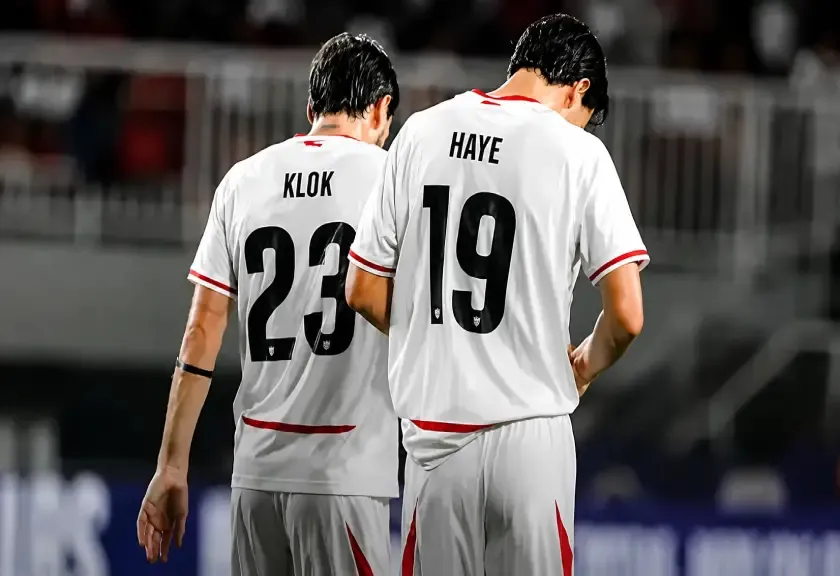
John Herdman is impressed by Thom Haye, the versatile all-round midfielder that has Vietnam remaining on high alert.
This result saw Indonesia finish 3rd in Group A with 7 points from 4 matches. Vietnam topped the group with 10 points, while Singapore secured 2nd place with 8 points and qualification to the semi-final round.
This elimination came as a heavy blow for the national squad. The match against Singapore was already a do-or-die fixture, following Garuda's earlier 0-3 defeat to Vietnam.
Just one point gained against Singapore ultimately proved not enough for John Herdman's side to progress out of the group stage.
The national football federation PSSI issued an immediate response to the result. PSSI Chairman Erick Thohir confirmed that a full formal evaluation will be held over the national team's performance at the 2026 AFF Cup.
This review is deemed necessary to properly prepare the squad for upcoming major commitments including the FIFA ASEAN Cup, official FIFA Match Days and the 2027 AFC Asian Cup.
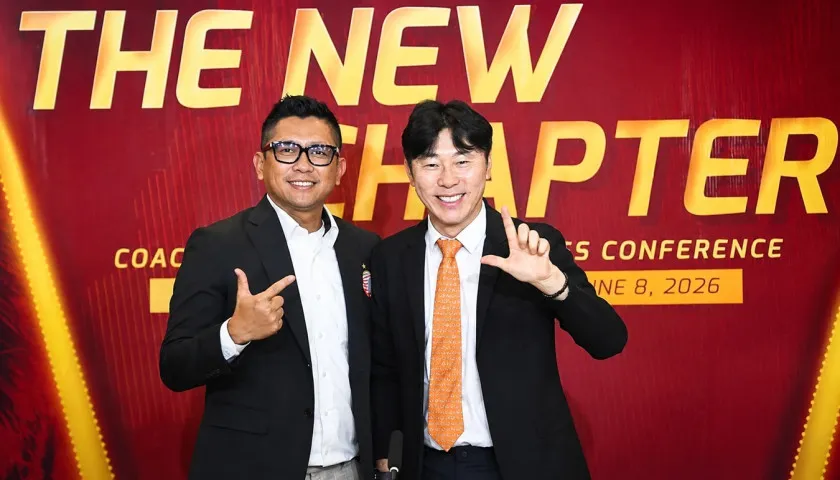
Beyond just discussion over match results, Indonesia's exit also saw the name of former head coach Shin Tae-yong resurface, with public comparisons now being drawn between him and current coach John Herdman.
This public reaction is not unfounded. This marks the second consecutive AFF Cup where Indonesia failed to reach the semi-finals, having also been knocked out at the group stage in the 2024 edition under Shin Tae-yong.
On that previous occasion, an experimental squad fielding mostly young players only collected 4 points and also finished 3rd in their group.
While both coaches failed to progress past the group stage, the full context of both tournaments are not identical. Even so, comparisons between the two men are difficult to avoid, as both Herdman and Shin took charge of their very first major tournament with Indonesia at the AFF Cup.
At the 2020 AFF Cup, Shin Tae-yong guided Indonesia through the group stage unbeaten before advancing all the way to the tournament final, where they finished runners-up to Thailand.
In contrast at the 2026 edition, Herdman could not take Indonesia out of the group stage. Garuda did start the tournament strongly with a 5-1 win over Cambodia followed by victory against Timor Leste.
However the subsequent 0-3 home defeat to Vietnam and 1-1 draw with Singapore left Indonesia confined to 3rd place.
The comparison grows starker when reviewing head-to-head results against Vietnam. During Shin Tae-yong's tenure, Indonesia recorded a famous 3-0 away win over Vietnam in Hanoi. At the 2026 AFF Cup by contrast, Garuda suffered an identical 0-3 defeat against Vietnam on home soil at Pakansari Stadium.
These surface level comparisons cannot be judged in absolute black and white terms. Squad composition, team fitness, opposition quality, tournament targets and the broader state of Indonesian football all differed significantly between the two periods.
That said, on-pitch results remain one of the core measuring sticks in professional football.
Football analyst Kesit Budi Handoyo stated it is entirely reasonable for supporters to draw comparisons between John Herdman and Shin Tae-yong, noting such public assessment is unavoidable when evaluating national team results under different leadership.
Fellow analyst Sapto Haryo Rajasa meanwhile observed that Shin Tae-yong left behind a strong track record of achievements during his tenure leading the national team.
These perspectives have expanded the public debate. The core issue is not simply to declare which coach was better, but to examine whether the national team project has actually delivered tangible progress following the change of head coach.
This is a critical question, as meaningful evaluation should never stop at merely replacing coaches or players.
PSSI must conduct a far deeper review covering playing philosophy, tactical effectiveness, performance consistency, cross-department coordination and long term continuity of the entire national team program.
Indonesia cannot remain trapped in this repeating cycle: changing head coaches, rebuilding the squad from scratch, then conducting crisis evaluations every time official targets are missed.
Shin Tae-yong's name may be brought up repeatedly. What matters far more however, is how the national team establishes new professional standards that can deliver consistent competitive success.
When approached correctly, reference to past eras should not be mere nostalgia, but valuable reference material to guide future improvement.
This discussion comparing John Herdman and Shin Tae-yong was the focus of a recent ITSMe Podcast episode featuring analysts Kesit Budi Handoyo and Sapto Haryo Rajasa.
In the discussion hosted by Gilang Respaty and Pudila from ITSMe Studio in Sentul, Bogor, both guests agreed that the 2026 AFF Cup exit warrants proper thorough review, including the public comparisons being made with the previous coaching era.
Ultimately this tournament failure is not just about assigning individual blame. This is a defining moment for PSSI to ensure that evaluation does not end at replacing the head coach, but instead sets out a clear, sustainable new direction for Indonesian national football.
Reflecting on the past is acceptable. But the Indonesia national team cannot continue to exist permanently in the shadow of previous eras.
If Shin Tae-yong's name is raised every time the national team falls short, the question is no longer about Shin. The real question is: how far has the Indonesia national team actually moved forward?