
Lake Toba is being evaluated to become a Special Economic Zone, which could transform the future of tourism in North Sumatra.

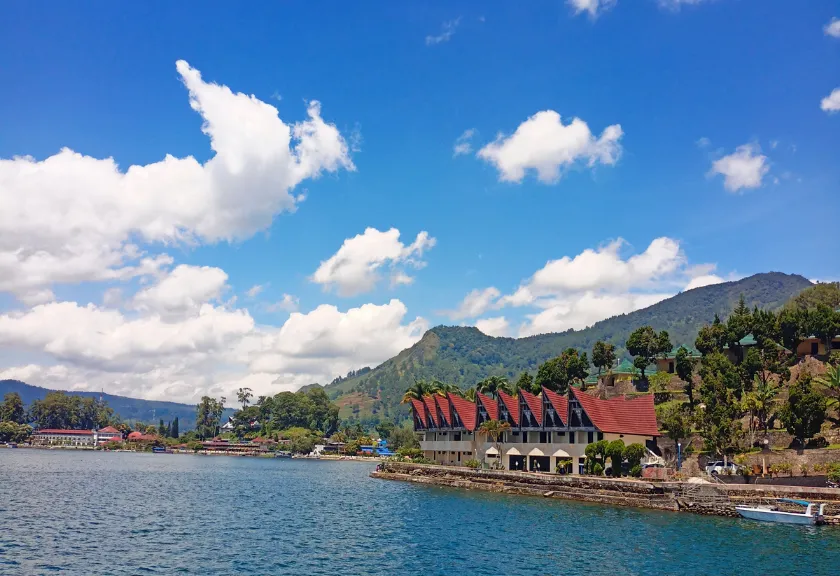
Source: Canva
Lake Toba holds assets that almost no other tourist destination can match. Its giant caldera landscape, Samosir Island, rich Batak cultural heritage, and surrounding mountain panoramas make this region far more than just a quick stop for photo opportunities.
Now, efforts are underway to elevate this existing potential to an entirely new level.
Bank Indonesia (BI) North Sumatra Representative Office, together with the National Research and Innovation Agency (BRIN), is currently assessing the feasibility of developing Lake Toba into a Special Economic Zone (SEZ).
READ ALSO
5 Must-Visit Medan Tourism Icons for Travelers in Early 2026
Derby Romero's New Film Features Samosir and Lake Toba Priority Destinations
Indonesia Boosting Tourism Campaign! Lake Toba as Flagship at Dubai Business Forum
This proposal is particularly notable because future development of Lake Toba will not solely focus on increasing visitor arrival numbers. Instead, priority will also be placed on encouraging travellers to extend their stay, access more varied activities, spend more time exploring, and increase their expenditure within the area.
Ameriza M Moesa, Head of BI North Sumatra Representative Office, confirmed that the joint assessment with BRIN is still ongoing to evaluate Lake Toba's eligibility for special economic zone status.
"Right now, we are conducting this joint study with BRIN to review Lake Toba's tourism potential for designation as a special economic zone, following the model applied at the Tanjung Lesung SEZ in Banten," stated Ameriza during a press statement in Medan on Saturday, 8 August 2026.
Not Just Visiting, But Extending Stays
For travellers, Lake Toba already offers a complete set of attractions. Beyond just lake views, the region provides immersive cultural experiences, local cuisine, natural exploration, and interconnected cross-destination travel routes.
The Toba Caldera has been officially recognised as a UNESCO Global Geopark. Formed by one of the largest supervolcanic eruptions in Earth's history, its unique geological landscape stands as one of Indonesia's most significant geotourism assets.
Traditional Batak culture also forms a core part of the Lake Toba travel experience. Visitors can explore authentic Batak traditional houses, Gorga wood carving art, and distinctive local cuisine including dishes prepared with andaliman, the region's iconic native spice.
With such strong foundations, the main challenge is no longer attracting visitors to come at all—it is giving them compelling reasons to extend their trip.
Ameriza emphasised that Lake Toba retains enormous untapped potential, both in terms of tourist attractions and cultural assets that can be further developed to draw more visitors.
"Additionally, we are urging all stakeholders including local governments and tourism operators to develop and offer a greater variety of travel packages," he added.
He noted that one critical area for improvement is the availability of accessible, well-designed travel packages for visitors to choose from.
Ameriza drew a comparison with established destinations such as Bali and Yogyakarta, which provide wide ranging activity and travel package options readily available through digital platforms.
"This variety is still very limited for Lake Toba at this stage. Going forward we will continue coordinating with business operators to expand the range of travel packages offered here," he explained.
Lake Toba As A Multi-Day Travel Destination
As travel package options become more diverse, the entire visitor experience at Lake Toba will be transformed.
Rather than arriving only to view the lake panorama before immediately moving on to the next destination, travellers will be able to plan multi-day itineraries with distinct, varied activities for each day of their stay.
For example, itineraries can be developed combining nature treks, Samosir Island exploration, immersive Batak cultural experiences, local culinary tours, and community-based tourism activities.
This model will also allow visitors to select experiences aligned with their travel preferences, including slow travel, cultural tourism, nature retreats, and family-friendly trips.
Expanding these visitor options is already part of ongoing development discussions. In May 2026, the Samosir Regency Government conducted observation visits to established Special Economic Zones in Bali, to study proven tourism development practices as part of the Lake Toba SEZ feasibility study.
This demonstrates that plans for a Lake Toba SEZ are not just conceptual proposals—practical steps are already being taken to learn from successful, mature destination management models elsewhere.
The core objective is that longer visitor stays in North Sumatra will generate significantly increased economic activity across all sectors surrounding the destination.
"We want visitors to spend more days holidaying in North Sumatra, and increase their spending while they are here, which in turn will boost regional revenue," Ameriza stated.
Successful Development Will Bring Widespread Benefits
Developing Lake Toba tourism as a Special Economic Zone will not be limited to building new hotels, restaurants, or tourist attractions.
A more complete travel ecosystem will also create expanded opportunities for MSME actors, tour guides, transport providers, homestay operators, craft artisans, food vendors, and local community groups.
For travellers, this development will be a positive change. As the tourism ecosystem matures, visitors will have far more experiences to choose from, with no need to rush their time at Lake Toba.
The Indonesian government continues to list Lake Toba as one of the country's Super Priority Tourism Destinations. Development work is also focused on improving human resources, infrastructure, and supporting tourism facilities across the region.
In April 2026, the Ministry of Tourism conducted an inspection visit to the Toba Caldera Resort, and pushed for accelerated development of the site as part of wider efforts to strengthen Lake Toba as a destination.
On the economic front, BI North Sumatra projects regional economic growth for North Sumatra will reach between 4.9% and 5.7% this year, with a forecast growth range of 5.1% to 5.9% for 2027.
If Lake Toba tourism can grow under this integrated development model, the sector has the potential to become a major additional driver for the North Sumatra economy.
Ultimately, the vision to establish Lake Toba as a Special Economic Zone is about far more than just gaining an official classification label.







Belum ada komentar. Jadilah yang pertama!