
FIFA's Plan to Sell World Cup Stakes Triggers a Wave of Opposition

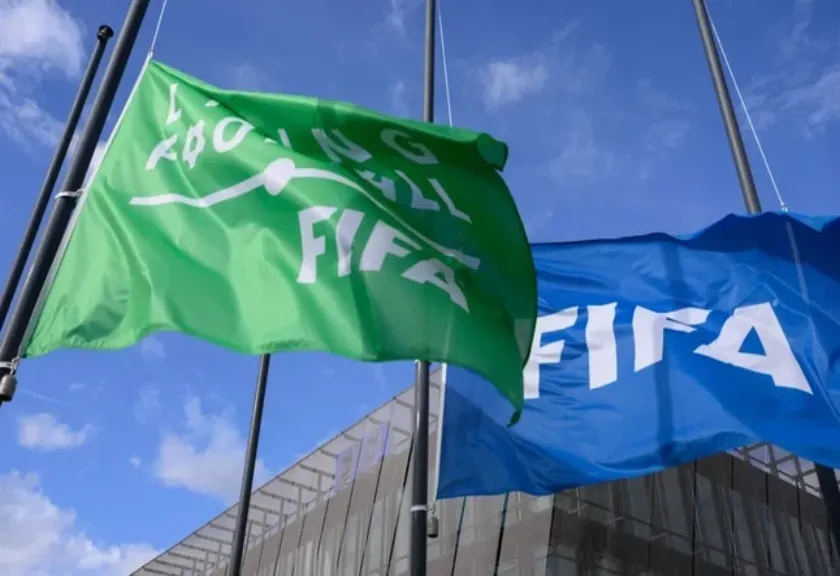
Source: FIFA
FIFA's plan to establish a new company that would allow selling World Cup shares to private investors has sparked widespread rejection from global football confederations. UEFA, the Asian Football Confederation (AFC), and Concacaf have all voiced concerns over the proposal, which is deemed capable of reshaping global football governance.
Controversy erupted after British outlet The Times reported that FIFA President Gianni Infantino was reviewing a scheme to sell partial ownership of World Cup commercial rights to private investors. The report noted that preliminary discussions with multiple investors had already been held, including with figures close to the Donald Trump administration.
This framework is projected to generate revenues of up to tens of billions of US dollars through the formation of a holding company that will manage FIFA's flagship competitions, including the men's World Cup, women's World Cup, and the Club World Cup.
READ ALSO
2026 World Cup: FIFA Confirms Iran to Play in United States
2026 World Cup: TRIONDA FINAL Named as the Official Match Ball for the Semi-Finals, All Three Host Nations Have Been Eliminated
FIFA Confirms Iran's Participation in 2026 World Cup, Rejects Alternative Scenarios
Amidst the emerging reports, FIFA also announced plans to increase football development funding to over 10 billion US dollars via the establishment of FIFA Forward Enterprise (FFE), conditional on receiving approval from FIFA member associations.
However, the move immediately drew fierce backlash from UEFA. The European football governing body stated that the idea of selling World Cup equity has crossed a line that should never be breached by the sport's governing authority.
"UEFA takes this extremely seriously. So should every national football association and every stakeholder: leagues, clubs, players, supporters, governments, and anyone who cares about the future of this sport," read UEFA's official statement.
UEFA emphasized that football is not a commercial asset that can be traded arbitrarily, especially without full transparency regarding which parties stand to profit from the transaction.
"The soul and governance of football are not assets to be traded — least of all without transparency over who receives financial benefit. None of us own football. Football does not belong to FIFA to sell," the UEFA statement continued.
Similar rejection came from Concacaf, the confederation governing North America, Central America and the Caribbean. The body held an emergency meeting with all 41 member associations and its FIFA Council representatives after learning of the FIFA Forward Enterprise proposal.
Concacaf judged that the proposal drafting process failed to meet proper governance standards, having been prepared in an extremely short timeframe without adequate consultation.
"Members have expressed deep concern at the lack of due process around this proposal, the artificially imposed short deadlines, and the absence of review or approval by the relevant FIFA governance bodies," stated Concacaf via its official website.
Alongside questioning the need for private investment, Concacaf noted that FIFA already holds very large financial reserves, meaning funding for the FIFA Forward programme should not require selling equity in the world's most prestigious football tournament.
Following the meeting, Concacaf formally rejected the FIFA proposal and instructed its FIFA Council representatives to push for the use of FIFA's existing reserves to strengthen football development, without bringing in external investors.
Concacaf also called on the FIFA President to ensure all strategic policies follow established governance procedures in line with the FIFA Statutes. The confederation stressed that the future of football must remain in the hands of the global football community.
"History has shown FIFA and the football family what happens when the custodians of the game lose sight of these values," Concacaf added.
AFC also demonstrated a critical stance. The Asian football confederation stated it was disappointed that it was never consulted before the FIFA Forward Enterprise proposal entered the public domain.
"The AFC was not consulted on this FFE proposal and is disappointed that such an important matter became public before the AFC family was given the opportunity to examine and discuss it through proper, established governance channels," read the AFC statement.
While acknowledging the importance of innovation for global football development, AFC stressed that any policy that could alter the commercial and financial structure of world football must be discussed openly with all confederations, member associations and relevant stakeholders.
According to AFC, all parties must be provided full information and sufficient time to evaluate the governance, legal, commercial and strategic implications before any major decision is taken. This process is deemed critical to preserve trust in FIFA's governance system.
Amid the wave of criticism, Gianni Infantino defended the proposal. The FIFA President confirmed that the establishment of FIFA Forward Enterprise is not a final decision, but merely one option that will be decided democratically by all FIFA members.
"FIFA Forward Enterprise is, in fact, a proposal, an offer. It is part of a democratic process, a consultation process, and most importantly it is an opportunity, not an obligation," Infantino stated in a video released by FIFA, as quoted by beIN Sports.
Infantino explained that the core objective of creating the company is to unlock the untapped commercial potential of FIFA competitions.
He added that management of broadcasting rights, licensing, commercial partnerships and new business opportunities would deliver benefits to all 211 FIFA member associations, should the plan be approved via voting procedures and the FIFA Council.
"To unlock this value requires additional expertise and insight that is different to the task of governing and developing the sport," he stated.
Concluding his remarks, Infantino rejected claims that the proposal would erase football's identity as a public sport. Instead, he argued that additional commercial funding would accelerate football development across the world.
"Fans everywhere will benefit enormously from this potential change, as it will transform football in every single country," he concluded.





Belum ada komentar. Jadilah yang pertama!