
Electric Tourist Pedicab Launched, Traveling Around Yogyakarta Is Now Much More Comfortable.

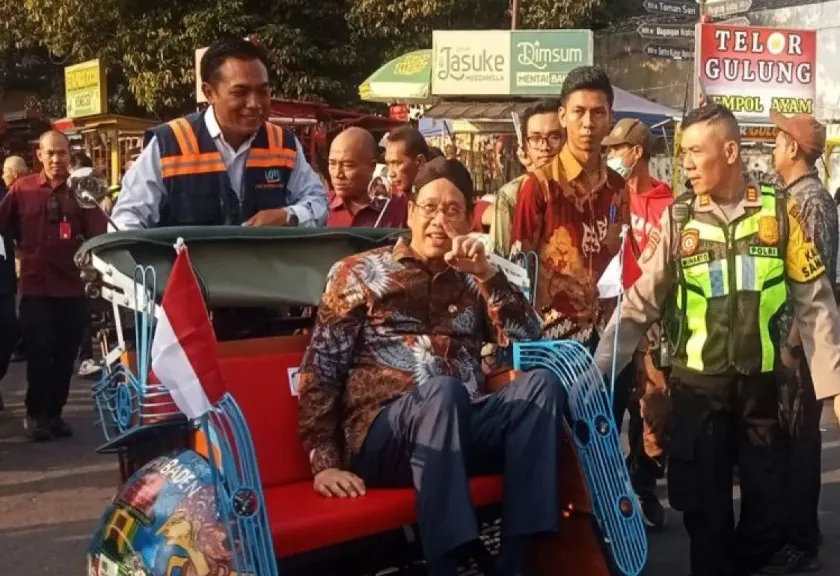
Source: Antara/Hery Sidik
Exploring every corner of Yogyakarta City has become even more comfortable, all while preserving the traditional atmosphere that remains the city's core appeal. Through the Government Investment Centre (PIP), the Ministry of Finance launched the Electric-Assisted Tourist Pedicab, locally known as Bekalista, as an innovative tourist transport initiative to support environmentally sustainable tourism.
This program is expected to deliver a more pleasant travel experience for visitors, while also raising the welfare of pedicab riders across the city.
Astera Primanto Bhakti, Director General of Treasury at the Ministry of Finance, stated that Bekalista was designed to provide safer and more convenient tourist transport without erasing the iconic, authentic characteristics of Yogyakarta's traditional human-powered pedicabs.
READ ALSO
Bandung Beautifies 17 Iconic Streets, Transforming City Into Open-Air Tourism Gallery
Smart, Proven Strategies Employed From Venice Through to Dubrovnik to Tackle the Global Surge in International Tourist Arrivals
South Jakarta Remains the Leading Tourist Favorite in the Capital City, Here Are the Underlying Driving Factors
"Bekalista was developed to improve safety and comfort for tourist transport, without stripping away Yogyakarta's cultural identity," stated the Director General during the official Bekalista handover ceremony at Yogyakarta South City Square on Thursday.
Staying Traditional, Powered By Modern Technology
Astera explained that pedicabs and horse carriages have been formally protected as official traditional vehicles under Yogyakarta Special Region Local Regulation No. 5 of 2016 and Governor Regulation No. 39 of 2024. This regulatory framework opened legal space for innovation such as electric-assisted pedicabs.
According to him, this technology makes pedicab rides comfortable and accessible for all visitor groups, including elderly tourists and travelling families.
"This pedicab is designed to be user-friendly for everyone, including older women. Riding it will not feel strenuous at all, and I believe this will make pedicabs a welcoming option for all visitors," he added.
Bekalista Developed Entirely By Local Yogyakarta Talent
Notably, 100% of the entire Bekalista development and production ecosystem uses local Yogyakarta workers. This covers every stage from metal fabrication, unit assembly, electric vehicle system engineering, through to official partnerships with local vocational high schools for practical teaching factory programs.
For the initial launch phase, the government symbolically handed over Bekalista units to 15 representative drivers, selected from 80 registered pedicab operators working in and around Yogyakarta city.
Supported By Mobile Workshops And Charging Infrastructure
To enable reliable daily operation, Bekalista is provided with full supporting facilities. This includes one mobile workshop unit, 12 public charging stations, 8 spare battery packs, and a central service workshop hosted at Yogyakarta State Vocational High School 3.
Astera explained this supporting infrastructure is intended to boost driver productivity, while also drastically reducing physical strain especially for elderly pedicab operators.
"Bekalista is expected to raise productivity and income for drivers, reduce physical exhaustion particularly for older workers, and advance green ecotourism through this low-emission, near-silent transport mode," he stated.
Beyond benefits for drivers, the rollout of Bekalista is also projected to enrich tourist experiences and encourage greater spending on local products and services across Yogyakarta.
Three Core Pillars For Long Term Program Sustainability
For this initiative to grow successfully long-term, Astera emphasised that three foundational pillars will underpin the program's continuity.
The first pillar is strengthening community governance through the Indonesian National Mobility Cooperative.
The second pillar focuses on independent asset maintenance, achieved by upskilling local mechanics and supported by the mobile on-site workshop service.
Meanwhile the third pillar covers digital technology integration, implemented through cashless transaction systems and utilisation of the official Jogjakita local platform for tourism marketing and service booking.
"For the third pillar, we will integrate full digital systems: this means digital payment transactions, and using the Jogjakita platform to expand marketing reach and make travel services easily accessible for visitors," he added.
By combining local cultural wisdom with thoughtful technological innovation, Bekalista is set to become the new face of tourist transport in Yogyakarta: more comfortable, environmentally sustainable, and still retaining the beloved cultural charm that has defined the city's pedicabs for decades.










Belum ada komentar. Jadilah yang pertama!