
When the Turf Quality of the 2026 World Cup Final Venue Comes Under Scrutiny

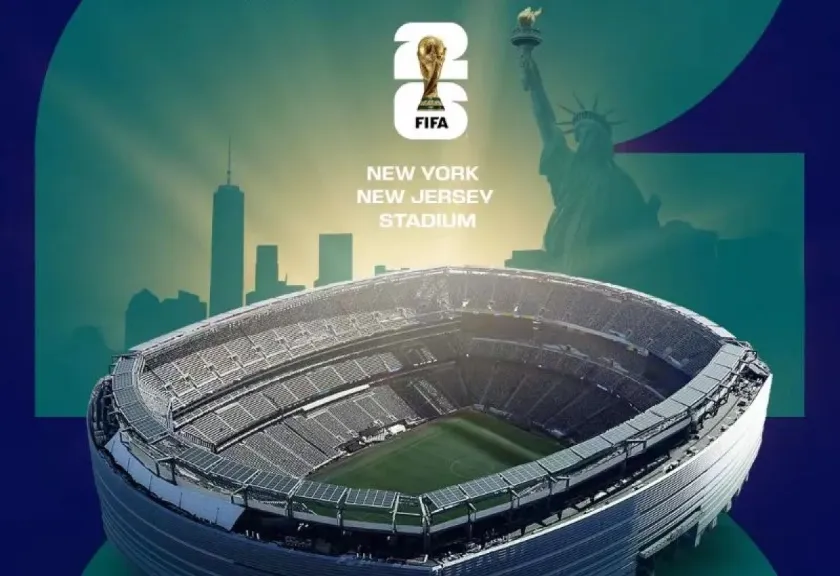
Source: Antara/FIFA
One of the most iconic stadiums in the United States has become the centre of widespread discussion. The pitch quality at the New York New Jersey Stadium, the venue set to host the 2026 FIFA World Cup final, has faced criticism from multiple star players.
This scrutiny emerged after the France men's national team opened their tournament run with a 3-1 victory over Senegal. Despite Les Bleus successfully securing all three points, the condition of the playing surface became the dominant talking point immediately after the full-time whistle.
New York New Jersey Stadium was previously known as MetLife Stadium. This venue acts as the shared home ground for two National Football League franchises: the New York Giants and New York Jets.
READ ALSO
The Quality of the Pitch at the 2026 FIFA World Cup Final Venue in the United States Has Come Under Public Scrutiny.
2026 World Cup Set to Make History, Total Combined Stadium Capacity Surpasses 1 Million Spectators
Brazil to face Japan, while Cape Verde's defence will be tested by Messi in the 2026 FIFA World Cup Round of 32.
Throughout the 2026 World Cup, this stadium is scheduled to host eight total matches, including the tournament's showpiece final fixture.
However, its status as the final venue has triggered serious concerns after France midfielder Adrien Rabiot and several other players publicly raised complaints over the stadium's grass quality.
"As for the pitch? Honestly I struggle to even call this a proper playing surface. It feels far more like artificial turf, it is excessively hard and rigid," Rabiot stated, as quoted by the BBC.
Rabiot's remarks follow similar criticism previously voiced by Brazil forward Vinicius Junior. The Selecao star admitted he was unable to settle into match rhythm during Brazil's 1-1 draw against Morocco.
"Once we reached the second half under the hot sun, the pitch dried out extremely fast. This slowed the entire flow of the game right down, and we couldn't establish the playing tempo we wanted," Vinicius explained.
These player complaints are not baseless. For regular NFL fixtures, this stadium uses permanent artificial turf. Ahead of the World Cup, tournament organisers installed a temporary overlay of natural grass in an attempt to comply with FIFA regulations.
Even so, the final result has been widely deemed unsatisfactory. The playing surface is judged to be overly firm, and fails to support the fast, dynamic style of play that defines modern professional football.
This issue has drawn extra public attention as the New York New Jersey Stadium already held a poor reputation for its playing surface conditions.
Within NFL circles, the venue was even infamously referred to as the 'MetLife Curse', after multiple athletes suffered career-altering serious injuries directly linked to the state of the pitch.
For casual spectators, grass quality may seem like a trivial detail. But for professional players, pitch conditions directly impact match pace, passing accuracy, and most critically, risk of injury.
Pitch Concerns Were Flagged Long Before The 2026 World Cup Began
Doubts over stadium grass quality are not a new issue. Long before the tournament kicked off, FIFA had already acknowledged that maintaining suitable natural grass surfaces across United States host venues would present a major operational challenge.
The 2026 World Cup operates under very different circumstances to all prior editions. The vast majority of matches held in the US are taking place at stadiums purpose-built for regular NFL use, almost all of which were fitted with permanent artificial turf as their standard surface.
Per official FIFA rules, every World Cup fixture must be played on natural grass. As a direct result of this requirement, 8 out of the 16 total host stadiums required large-scale, last-minute modification works to meet international football standards.
Converting these venues from artificial to natural grass has proven far more complicated than simply laying a new surface. Most NFL stadiums were never engineered to support natural grass from their original design, lacking the required ventilation systems and adequate sunlight exposure needed to keep a healthy, playable pitch.
Despite extensive pre-tournament preparation works, pitch quality at multiple host venues remains an ongoing source of concern as the tournament progresses.
This growing scrutiny over pitch conditions demonstrates that the challenges of hosting a World Cup extend far beyond the action on the pitch. It also requires infrastructure capable of meeting the absolute highest standards set for global professional football.










Belum ada komentar. Jadilah yang pertama!