
Indra Sjafri Reveals 5 Essential Foundations for Indonesia to Qualify for World Cup

Source: Antara News Agency/Donny Aditra
The dream of Indonesia competing in the World Cup is no longer just an emotional aspiration but requires a clear, consistent, and boldly executed roadmap. Football practitioner and Former Indonesian National Team Coach, Indra Sjafri, outlined five fundamental steps PSSI must take if it wants to bring the Garuda to the world's highest football stage.
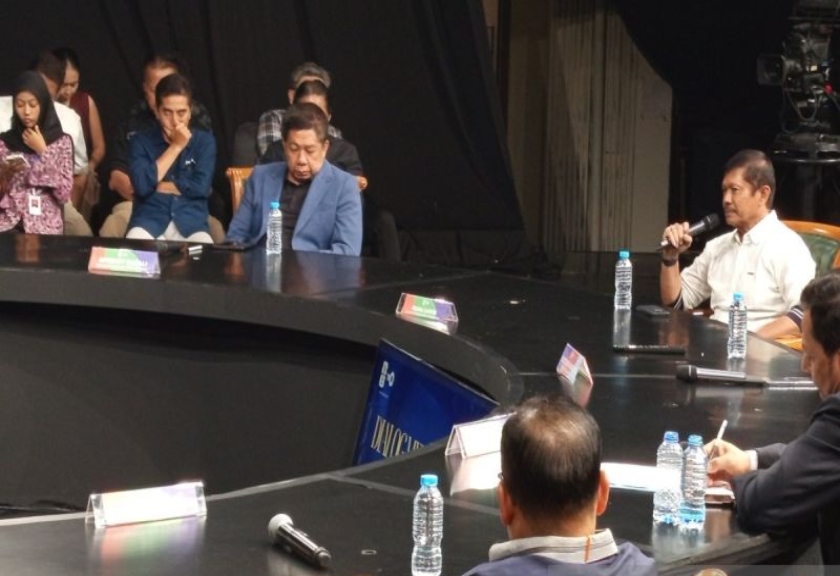
Speaking at a Roundtable Dialogue themed "The 2026 World Cup, the press, and our public civilization; Sports broadcasting as a space for education, literacy, and strengthening public values" at the Bung Karno Auditorium, LPP TVRI, Jakarta, on Tuesday, Indra emphasized that Indonesia's realistic target is not tomorrow, but long-term development with the horizon of the 2034 World Cup.
The first foundation starts with infrastructure development. According to Indra, improvements must not get stuck solely on projects for magnificent stadiums in big cities. The roots of Indonesian Football lie in the villages, where player talents are born and nurtured.
READ ALSO
Indra Sjafri Dismissed After Garuda Muda Fails SEA Games 2025 Thailand Target
Netherlands National Team Relies on English League Squad for the 2026 World Cup.
PSSI is evaluating the old format, the 2026 President's Cup could be more innovative.
"Infrastructure isn't just about building stadiums in cities; football fields in villages must also be improved," stated Indra.
Without access to proper fields from an early age, the development process will be unbalanced from the start. He believes Indonesia still needs fundamental improvements to make the chance of reaching the World Cup realistic, not just a collective dream.
The second step is the renewal of the national football curriculum. Modern football moves fast—both in terms of intensity, tactics, and sports science approaches.
A stagnant curriculum will only leave Indonesia behind countries that continuously adapt to global trends.
For Indra, an adaptive curriculum is the foundation ensuring training methods and playing philosophy align with developments in World Football.
The third pillar touches on an aspect often overlooked in public scrutiny: the availability of quality coaches with A Pro licenses. Indra cited figures reflecting Indonesia's current major challenge.
Indonesia, he continued, currently only has 44 people holding A Pro licenses. This number contrasts sharply with Japan, which already has thousands of coaches with similar licenses—a human resource investment directly impacting player quality.
The fourth step is building a clear and structured player development pathway. From an early age to the professional level, every player must go through a tiered, interconnected system.
Without Continuity, talented players risk dropping out before reaching the highest level.
A well-organized development structure is believed to create consistency in player quality and character from generation to generation.
Finally, Indra stressed the importance of strengthening youth competitions as the foundation for long-term regeneration. Regular, high-quality competitions are not just about playing time, but also about building competitive mentality and spirit from an early age.
Regarding this point, Indra gave appreciation to PSSI, which he assessed is starting to take concrete steps.
"If these five things are fixed, then the 2034 ambition can be discussed," he concluded.





Belum ada komentar. Jadilah yang pertama!