
Banyuwangi Red Durian Officially Becomes Geographical Indication Product, East Java Culinary Tourism Icon

Source: Antara/HO-Banyuwangi Regency Government
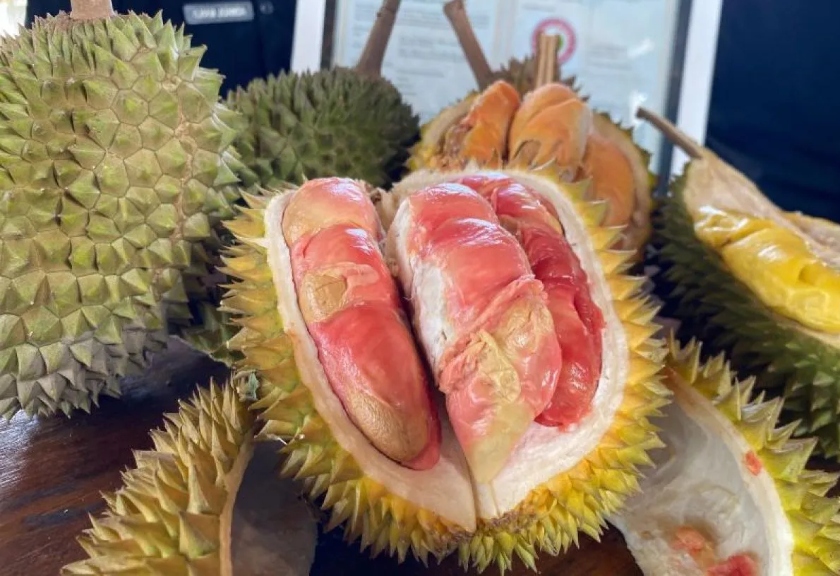
On the green slopes of Banyuwangi, a rare durian with fiery red flesh has officially gained national recognition. The Red Durian unique to Banyuwangi Regency has been designated as a Geographical Indication (GI) product, cementing its identity as an exotic fruit born from the combination of nature and local culture.
This designation was made by the Directorate of Trademarks and Geographical Indications of the Ministry of Law, simultaneously registering Banyuwangi's red durian as Indonesia's first GI product in the durian fruit category. The process was lengthy, starting from the application in 2023 until its official issuance.
Banyuwangi Regent Ipuk Fiestiandani called this recognition a significant milestone for her region.
READ ALSO
Tourist Visits Increase, Tourism Supports Banyuwangi's Economic Growth.
Exploring the Ijen Golden Route: Trail of Nature, Culinary and Cultural Tourism at the Foot of Mount Ijen
Sports and Tourism Blend, Banyuwangi Proves Sport Tourism Can Boost Economy
"Alhamdulillah, the GI certificate for Banyuwangi red durian has been issued, making it Indonesia's first GI for red durian," she stated.
For Banyuwangi, red durian is not merely a horticultural commodity but part of the cultural landscape and Indonesian Culinary Tourism Potential.
With Geographical Indication status, Banyuwangi red durian gains both protection and added value.
Ipuk hopes this recognition will serve as a promotional tool, boost farmer productivity—especially in Songgon District as the main center—and encourage Tourist Visits to this easternmost regency of Java.
"Come to Banyuwangi, savor its red durian, because Banyuwangi's red durian is uniquely unmatched by other regions," Ipuk urged.
The uniqueness of Banyuwangi red durian was explained by Acting Head of Banyuwangi Agriculture and Food Agency, Ilham Juanda.
According to him, the crimson flesh combined with distinctive flavor and strong aroma sets it apart from other Indonesian durians.
"This uniqueness stems from natural factors like soil, climate, and elevation, alongside inherited local knowledge and generational cultivation practices," he said.
Banyuwangi red durian exhibits several flesh color gradations: red, rainbow-red, and reddish hues.
Physically, the fruit is round to oval-shaped with yellow-green skin, containing 4–7 segments. The flesh thickness ranges from 4.2-18.5 millimeters, constituting 41.7% of the fruit.
Quality-wise, its characteristics captivate durian enthusiasts.
It features a potent aroma, balanced sweet-bitter taste, soft and pulpy texture, plus high nutritional content including antioxidants, vitamin C, and relatively low fat.
Scarcity adds another layer of value. Ilham noted only six mother trees are currently registered under GI, with estimated average production reaching four tons per tree.
These originate from six superior national varieties: balqis, SOJ, gandrung, sayu wiwit, tawangalun, and madu Blambangan.
These varieties grow across Songgon, Rogojampi, Singojuruh, Glagah, Licin, and Srono districts, forming a red durian corridor integrated with Banyuwangi's mountainous landscapes and agrarian villages.
"Since 2015, 12 local Banyuwangi durian types have been registered as superior varieties. Six of these are red durians," Ilham explained.
Overall, Banyuwangi has 3,262 hectares of durian harvest area producing approximately 27,890 tons, spread across multiple districts.
With GI recognition, Banyuwangi red durian becomes not just a symbol of local biodiversity but an open invitation for travelers to explore the taste, nature, and stories behind this rare crimson fruit.
As an official marker, Regent Ipuk Fiestiandani presented the GI certificate for Banyuwangi Red Durian to the Geographical Indication Protection Community (MPIG) in Songgon District.










Belum ada komentar. Jadilah yang pertama!