
Sumedang Larang Palace, Hidden Gem of Sundanese Cultural Tourism in West Java

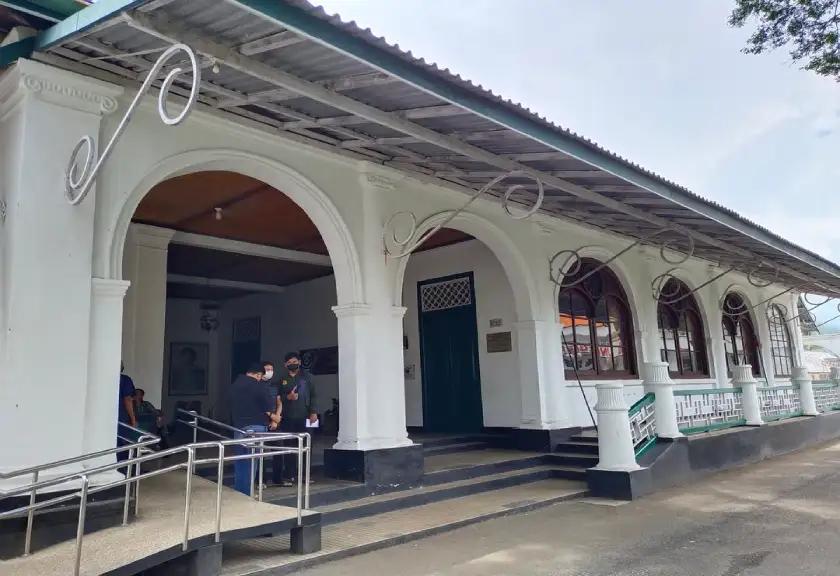
Source: Instagram @sumedang.tandang
Sumedang has long been merely passed through by travelers journeying along the Bandung–Cirebon route. Yet, this region in eastern West Java holds great potential as a Tourist Destination rich in history and authentic cultural experiences. This was highlighted by Minister of Culture Fadli Zon during his visit to Sumedang on Saturday, January 17, 2026.
According to Fadli, Sumedang possesses strong foundations to develop into a premier Sundanese culture-based destination, with the Sumedang Larang Palace as its central axis.
"Sumedang has great potential to become the center of Sundanese culture. In the future, Sumedang should not merely be a transit point, but must truly become a main destination," he said.
READ ALSO
Kampung Kayutangan, Malang City's Tourist Magnet, Helps Achieve 3.4 Million Visits Target
10 Best Tourist Destinations in the World That You Must Visit At Least Once in Your Lifetime
Strengthening Tourism Promotion for Penyengat Island Based on Malay Culture
For travelers seeking experiences beyond just photos and cuisine, Sumedang offers a complete package. Ranging from Cultural Tourism and history, Nature Tourism with the characteristic hilly landscapes of East Priangan, to Religious Tourism and local culinary delights that retain their authenticity.
"It can become a cultural destination, a historical destination, nature tourism, Religious Tourism, Culinary Tourism, and more. If the area develops, this will certainly also benefit the people of Sumedang Regency," he said as quoted in the ministry's press release.
One primary magnet drawing attention is the Sumedang Larang Palace. Fadli believes this area has significant potential to be developed as the epicenter for the advancement of Sundanese culture, not just as a historical site, but also as a living space for cultural activities.
"Because the palace or sultanate region is one of the places to nurture, protect, and advance culture," he stated.
In the context of contemporary tourism, the palace is no longer just an old building; it can become an educational space, an arts performance center, and even a storytelling tourism destination favored by the Young Generation. This concept aligns with the trend of travelers seeking meaningful and sustainable experiences.
Fadli also emphasized the importance of sustainability in cultural management, involving the Younger Generation as the primary agents of cultural advancement.
"What we hope for is sustainability within the cultural ecosystem, especially concerning the progress of Sundanese culture," said Fadli, who during his time in Sumedang also inspected the Heritage Museum, Art Pavilion, Gamelan Building, and the Nagara Sumedang Building.
From the management side, the Sumedang Larang Palace expressed readiness to support this initiative. Sri Radya Keraton Sumedang Larang, H.R.I Lukman Soemadisoeria, affirmed his commitment to safeguarding cultural assets while opening space for revitalization.
"We hope the revitalization of the archipelago's palaces, especially the Sumedang Larang Palace, can be carried out as soon as possible," he stated.
Currently, the Sumedang Larang Palace functions as the Prabu Geusan Ulun Museum. It houses various historical relics that bear witness to the long journey of the Sumedang Larang Kingdom, such as the Binokasih Crown, the royal throne, heirloom weapons, ancient manuscripts, gamelan musical instruments, and the royal carriage.
For travelers wanting to explore West Java from a different perspective, Sumedang offers a tourism experience that is not only beautiful but also rich in meaning. A destination perfectly suited for young travelers eager to understand local culture while tracing the historical footsteps of the archipelago.








Belum ada komentar. Jadilah yang pertama!