
Padel, a racket sport blending elements of tennis and squash, is gaining popularity in Indonesia. Beyond being a healthy activity, it serves as an effective social medium. For those serious about mastering padel, the path is more structured than casual play. This article guides you through the ideal stages for progression, drawing from the experiences of ITSME.co.id hosts Syafira and Raisha, and reviews facilities and tournaments you can enter.
A wise first step is building a solid technical foundation. Many beginners jump straight onto a real court, splitting their focus between ball control and footwork. The solution is practicing at a simulator facility like Padel Matic.
This venue offers automated padel and tennis simulations adjustable to your needs. Its key advantage is training your ball-hitting sensation without pressure. You can set the speed, angle, direction, and ball pattern (including random patterns) via the machine. This allows repetitive practice of specific shots like volleys, lobs, or smashes until your muscles and memory adapt.
READ ALSO
Learning Padel from Experts, Basic Techniques New Players Must Master
Besides a Racket, What Should You Prepare Before Playing Padel?
Hexagon Cup 2026: Lewandowski Returns as RL9 Team Captain at the Most Prestigious Padel Event
Stage 1: Honing Basic Technique at the Simulator
The facility is beginner-friendly. On-site staff provide basic playing tips for complete newcomers. Furthermore, rental rackets are available for those without equipment, enabling practice without an initial investment.
Stage 2: Adapting to the Real Court
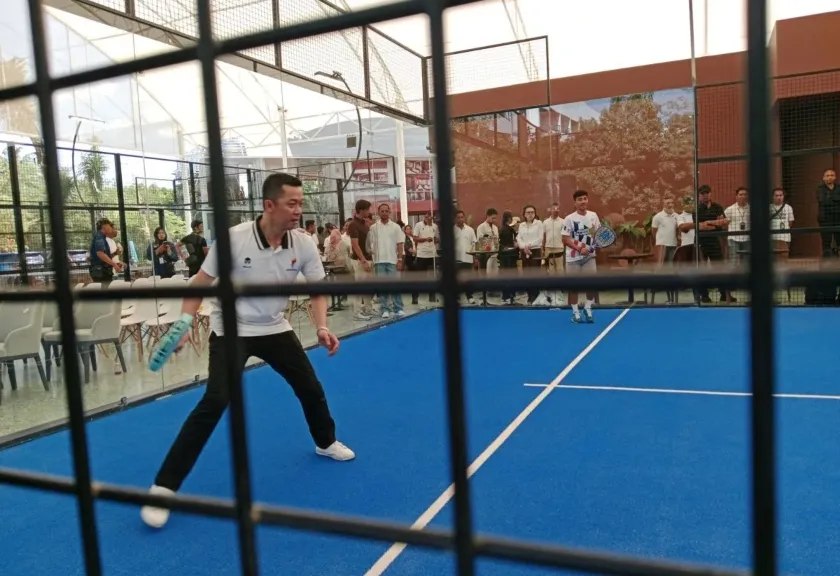
Once confidence in your strokes builds, it's time to move to a regular padel court. Here, you apply simulator training results in a real-game context. You'll learn footwork, correct body positioning when facing wall rebounds, and crucially, interacting with partners or opponents.
Modern courts are designed for an optimal experience. Some feature full crystal glass walls, offering not only a premium look but also clearer visibility of ball bounces for players and unobstructed viewing for spectators. Some venues also offer courts with retractable roofs, allowing play under open skies or shelter from the weather, enabling 24/7 operation.
Stage 3: Choosing the Right Equipment
As you play more regularly, owning a personal racket becomes essential. The racket is an extension of the player, and the right choice significantly impacts performance. Recommendations by level:
For Beginners: Choose a lightweight racket (around 350 grams) that's easy to control to reduce fatigue. Fiberglass material rackets are popular choices, offering good balance and comfort.
For Intermediate Level: As playing frequency and intensity increase, opt for a carbon material racket providing better stability and control for long rallies.
For Active & Tournament Players: Those targeting competitions should consider high-tech rackets like the Nox AT10 Genius 18K or Bullpadel Vertex 04. These offer a combination of maximum power and anti-vibration systems for aggressive play.
Stage 4: Testing Skills in Tournaments
After sufficient practice, challenge yourself by entering tournaments. This is the best way to gauge ability, gain match experience, and expand your network among fellow padel enthusiasts. One such target event is Padel Connect, organized by Vivere Group in Kuningan, Jakarta.
Participating in such tournaments provides a distinct experience. As the ITSME.co.id editorial team found, it's the moment to test training results under real match pressure. Prizes are often attractive, mentioned as reaching tens of millions of rupiah, adding motivation to perform your best.
Benefits Beyond Sport
The journey into padel offers holistic benefits. Beyond improving physical fitness, coordination, and reflexes, this sport effectively builds business connections and friendships in a relaxed, positive atmosphere. Playing sessions also serve as effective stress relievers to refresh the mind before returning to work routines.
By following these systematic stages—building technical foundations, adapting to the court, selecting the right equipment, and competing—you not only become a more skilled player but also fully enjoy every aspect of this rapidly growing sports trend.