
Taste of Indonesia in Hangzhou: Indonesian Cuisine Takes Center Stage in Flavor Diplomacy

Source: Antara
The "Taste of Indonesia" festival at Le Meridien Hangzhou Binjiang, Zhejiang, China, is more than just a celebration of Indonesian cuisine. For two full weeks, authentic Indonesian dishes are cooked directly by chefs from Indonesia and served to guests at the five-star hotel restaurant. This event is a concrete step in expanding cultural diplomacy through the richness of Indonesian flavors, with two major Asian countries as its stage.
At the festival's opening, Indonesian Consul General in Shanghai, Berlianto Situngkir, emphasized that Indonesian cuisine hides great history within its spices.
"We can learn about Indonesia through its culinary experience because in Indonesia, every island has its own distinctive spices," stated Berlianto.
READ ALSO
Halal Flavor Destination, Indonesian Cuisine's Global Potential
Not Just Beaches, Bali Set to Become World's Gourmet Paradise
Minang Cuisine in Singapore, Warong Nasi Pariaman Closes on January 31 After 78 Years
He also reminded that spices like pepper, cinnamon, cardamom, nutmeg, and cloves were key commodities in the "spice route" connecting Asia to Europe. That route, Berlianto said, not only formed the foundation of global trade but also facilitated cultural exchange between Indonesia and China.
Priced at 218 RMB (approximately Rp518 thousand) for an "all you can eat" session, visitors can enjoy authentic Indonesian dishes from November 21 to December 7, 2025, every Wednesday to Sunday.
When Craving Indonesian Flavors is Met Directly in a Hangzhou Kitchen
Le Meridien Hangzhou Binjiang General Manager, Joey Jung, has a simple reason for holding this event.
"I really like Indonesian food but I couldn't find an Indonesian restaurant here," he said.
"So we thought, what if we bring chefs from Indonesia here to cook Indonesian food and introduce it to the local community?"
The South Korean native admitted he fell in love with nasi goreng (fried rice) and satay, two globally recognized Indonesian culinary icons. The spicy palate of Koreans makes them easily drawn to the character of Indonesian spices.
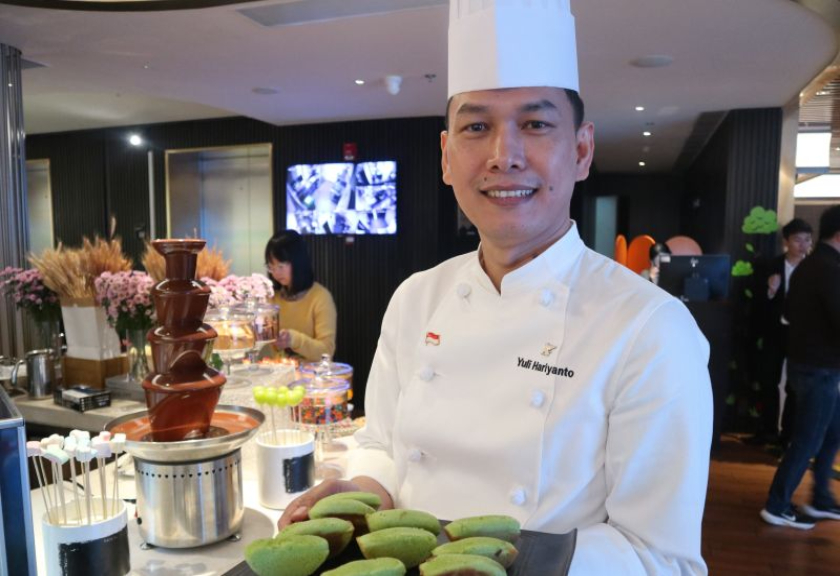
Chef Yuli Hariyanto, The Archipelago's Flavor Ambassador in Hangzhou
The figure behind the festival's menu is Yuli Hariyanto, Executive Sous Chef of JW Marriott Surabaya. He brought the concept of menu curation, selecting dishes that best represent the diversity of the archipelago.
Gado-gado (vegetable salad with peanut sauce), Jimbaran-style spiced fish, rendang (beef stew), opor ayam (chicken in coconut milk), sate maranggi (Maranggi satay), dabu-dabu (spicy condiment), to kolak pisang (banana in sweet coconut milk) are among the menus prepared directly by him.
"I created the menu myself, I chose dishes that are truly iconic to Indonesia," said Yuli.
Yuli also explained that this festival is part of the Marriott group's regular chef exchange program. He even grilled the chicken satay on the spot to ensure it stayed fresh when served.
Interestingly, the biggest challenge wasn't the spices or ingredients, as most could still be found in Hangzhou, but the level of spiciness.
"It's just that here, they reportedly don't like things too spicy, so for the sambal (chili paste), I reduced the heat... still waiting for visitor feedback," he revealed.
One ingredient that had to be brought from Indonesia? Terasi (shrimp paste). The rest could be sourced, although it required extra effort because Indonesian cooking usually takes a long time.
From the Multilingual Kitchen to Knowledge Transfer
Despite language barriers, Yuli felt supported by the local chefs. He mentioned the existence of "kitchen language"—a universal gesture applicable in any kitchen.
He has even shared several recipes with the local chefs.
"Yes, indeed, the purpose of this festival is to popularize Indonesian cuisine," he added.
One thing missing from this festival is Archipelago coffee, an opportunity that could be explored in future editions given the growing global trend for single-origin coffee.
This is Indonesia's Branding in the Eyes of the World
In a global context, cuisine is not just about food—it's about identity. Many developed countries use their cuisine as a cultural strategy tool: Korea with K-Food, Japan with washoku, Thailand with Thai Select.
Indonesia is starting down a similar path, and festivals like this are important steps in expanding the reach of Indonesian cuisine. Data from the World Tourism Organization shows that 53% of global tourists choose destinations based on culinary experiences. This figure opens up the possibility that Indonesian cuisine is not only a local attraction but also a tourism draw.
"Taste of Indonesia" in Hangzhou is proof that Indonesian food can be accepted in the international market, especially when presented with five-star hotel quality by professional chefs.
Indonesia is present not only as a spice-producing country but as the owner of a flavor character that is respected and celebrated.




Belum ada komentar. Jadilah yang pertama!