
Rinjani From Various Angles: Non-Climbing Destination Stealing the Spotlight

Source: Antaranews
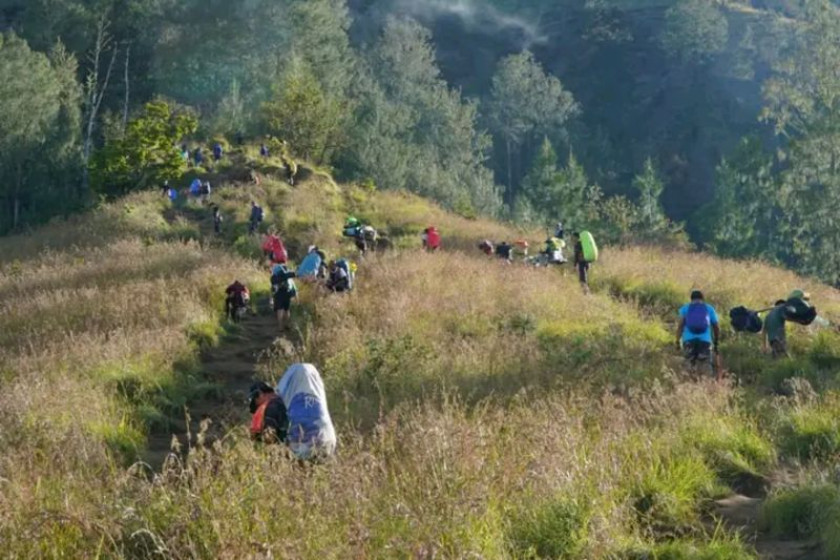
Mount Rinjani always has its own way of captivating humans. Every year, the silhouette of this mountain becomes a magnet for seekers of space, silence, and adventure. By October 2025, the Mount Rinjani National Park Office (TNGR) recorded 72,528 climbers who had stepped onto the trails stretching across the body of this active volcano.
"The Mount Rinjani National Park area has attracted local and international attention, with total visits continuously rising, reaching 72,528 people at the hiking tourism destination," said Head of the NTB TNGR Office, Yarman, in Mataram on Friday, November 14, 2025.
This figure confirms one thing: Rinjani is not merely a tourist object, but a living space that continually invites curiosity and respect from travelers.
READ ALSO
Mount Rinjani Trekking Fees Increase for Safer, More Professional, and Sustainable Treks.
Mount Rinjani Temporarily Closed for Hiker Safety and Ecosystem Recovery
Luxury Adventure: Conquer Rinjani to Himalayas with Wild and Lavish Thrills
Rinjani: A Landscape Breathing Again
After being temporarily closed in February 2025 due to extreme weather, several non-hiking destinations at the foot of Rinjani reopened and were immediately met with enthusiasm. In recent months, the area recorded 43,502 visitors, signifying that Rinjani's beauty isn't only found on the paths to the summit, but is scattered from the valleys to the hills.
Some of these destinations have now become the new face of East Lombok's ecotourism:
- Tangkok Adeng, a silent space offering fresh village air
- Bornong Bike Park, a destination for adrenaline lovers and terrain rhythm play
- Bukit Malang via Tombong Rebo, a favorite spot offering a different perspective on the Rinjani landscape
- Sebau in Sapit Village, a stopover point presenting gentle hill panoramas
- Savana Propok, a vast expanse changing color with the seasons
- Sembalun Bike Trail, increasingly popular as an adventure arena while enjoying the open horizon
"The number of visitors to non-hiking tourism destinations, both local and foreign tourists, is 43,502 people," he said.
The return of these various destinations makes Rinjani seem to breathe more vibrantly, offering alternative spaces for tourists who simply want to celebrate the landscape without having to traverse hiking trails.
Rainy Season: A New Chapter in Treading Rinjani
Yet beauty always comes with a caveat. As the rainy season arrives, TNGR again reminds every climber to be wiser in reading nature's signs.
"The rain has come, wise climbers prepare and remain vigilant when hiking in the Mount Rinjani area," said Yarman.
Rinjani under rain has a different character. Fog often descends faster, trails become slippery, and vegetation appears denser. Nature reveals another face, quieter and more honest, but also demanding greater preparedness.
"Rinjani remains enchanting under the drizzle, but remember, climbing during the rainy season requires preparation beyond mere determination. Rain is not a barrier to loving nature, but a reminder to be wiser when engaging in activities within it."
"The rain may fall, but don't let vigilance subside," he said.
TNGR reminded climbers of several important preparations:
- Checking weather forecasts and trail status before departure
- Bringing waterproof equipment like raincoats, bag covers, dry bags, and adequate footwear
- Maintaining body temperature with thick jackets, high-calorie food, and a thermos of warm water
- Focusing on trails that are more slippery and prone to change due to water flow
"Focus and be vigilant on slippery trails," he said.
Ultimately, the most fundamental message remains the foundation of every journey. Prioritize safety, the summit is not everything, returning safely is everything, stay vigilant for safety.
Rinjani as a Meeting Space Between Humans and Nature
Over the past few years, Rinjani has not only been a hiking destination but a space for dialogue between humans and nature. The growth in visitors, both climbers and non-hiking tourists, reflects how this mountain continues to be a symbol of inner journeys, visual quests, and the process of re-understanding our relationship with the landscape.
From the shifting colors of the savanna, valleys breathing softly, to the stone trails holding stories of thousands of previous steps, Rinjani teaches its visitors that every journey is not just about reaching the summit, but appreciating the process on every step of its terrain.









Belum ada komentar. Jadilah yang pertama!