
Indonesia Tourist Travel Pack Enhances Bali Tourism Digitally and Makes It More Foreign Tourist-Friendly

Source: Antara News
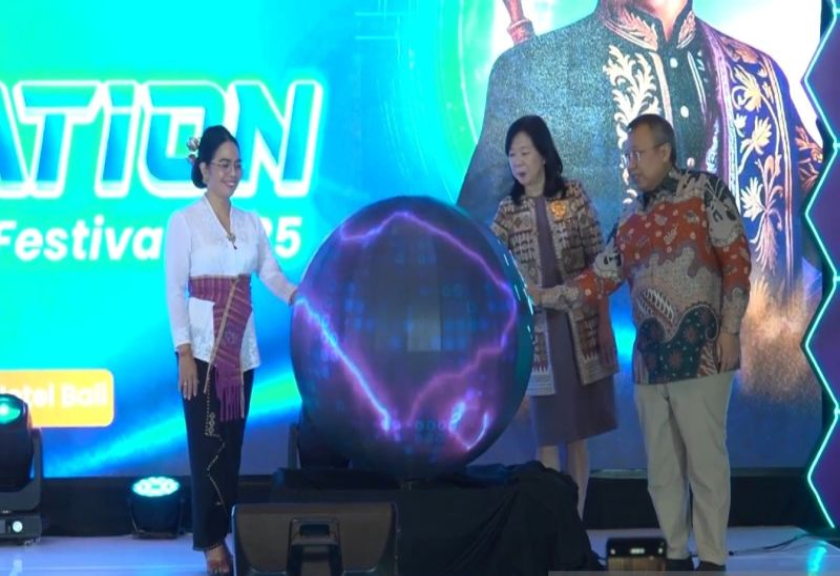
Bali is once again becoming an innovation laboratory. Not about destinations, but about a new way to enjoy travel without cash. Bank Indonesia (BI) has just launched the "Indonesia Tourist Travel Pack", a breakthrough that allows foreign tourists to immediately enjoy the digital payment system the moment they step foot at I Gusti Ngurah Rai International Airport, Bali.
Deputy Governor of BI, Fillianingsih Hendarta, explained that this step isn't just about transactions, but about the experience.
"The ease of transactions becomes an important part of the tourist experience in Bali," said Fillianingsih on the sidelines of Baligivation 2025, Denpasar, Tuesday, November 11, 2025.
READ ALSO
Here's Why Bali Remains Indonesia's Top Wellness Destination
Cool Charm Bedugul, Bali Botanic Garden Top Holiday Pick for 2025/2026 Nataru
Discover True Serenity in Bali: Best Wellness Retreat Recommendations for 2025
With this initiative, foreign tourists can immediately obtain a local SIM card, chip-based electronic money, and a digital wallet (e-wallet) registration guide. Practically, upon exiting the arrival terminal, they can directly grab coffee in Canggu or book a villa in Ubud without the hassle of currency exchange.
Bali Becomes Indonesia's Cashless Tourism Pilot Project
This move isn't just about a modern lifestyle. BI and its strategic partners are positioning Bali as a model for the national payment system digitalization. Through this project, Indonesia aims to present itself as a world-class tourist destination that's not only beautiful but also technologically efficient and inclusive.
In addition to digital payment services, BI also launched the QRIS Wisata Nusantara guidebook, a kind of digital guide featuring leading destinations, local cuisine, and cultural activities across Indonesia. All can be accessed via the QRIS barcode connected to the national payment system.
"These three initiatives are aimed at strengthening Indonesia's position as a tourist-friendly country and increasingly ready towards a cashless and digital tourism ecosystem," stated Fillianingsih.
This concept aligns with global trends. According to UN World Tourism Organization (UNWTO) data, tourists today increasingly seek destinations that are not only visually appealing but also comfortable in terms of digital infrastructure. In that context, Bali could become Southeast Asia's pioneer for a truly "smart" tourism model.
A Major Leap in the QRIS Era
Over the past five years, Indonesia's payment system transformation has experienced extraordinary growth. Fillianingsih noted that by Q3-2025, QRIS had been used by over 58 million users and 41 million merchants, with transaction value surpassing Rp1,900 trillion. A figure showing how rapidly society is shifting to a cashless system.
This trend also brings positive impacts to Bali's tourism sector. Based on Bank Indonesia data, Bali's economy grew by 5.88 percent in Q3-2025, one of the highest nationally. Tourism foreign exchange contributions from the Island of the Gods even reached 64.29 percent of the sector's total national revenue.
Digitizing the payment system clearly strengthens this competitiveness. Tourists can make payments from local stalls to five-star resorts without currency or cash barriers. This efficiency is expected to extend tourists' length of stay while boosting the potential of the local creative economy.
What Bank Indonesia is doing through the Indonesia Tourist Travel Pack is essentially more than just technology. It's about Indonesia's new way of hosting the world's guests—quickly, comfortably, and without borders. From the tourism experience side, this system also makes interactions between tourists and local players more natural, free from cash distractions.
Bali, with all its charm, is now stepping into a new era towards smart, inclusive, and cashless tourism.
As Fillianingsih said, digitalization isn't just about efficiency, but part of Indonesia's new image in the eyes of the world—a destination that's modern without losing its identity.









Belum ada komentar. Jadilah yang pertama!