
Sentul, Bogor – Selecting the eleven best players of the World Cup is nowhere near as simple as picking the top goal scorers or the most popular athletes.
Behind every official Team of the Tournament selection lie differing methodologies. This is exactly why one media outlet's chosen lineup can differ entirely from another, even when both organisations watched every match of the same tournament.
One of the most comprehensive selection approaches comes from Opta Analyst.
READ ALSO
Many Paths to the 2026 World Cup Round of 32: Who Will Qualify, Who Will Stumble?
Tactical Breakdown of England vs Argentina: Why Spain Was Able to Subdue France
2026 World Cup: TRIONDA FINAL Named as the Official Match Ball for the Semi-Finals, All Three Host Nations Have Been Eliminated
Following the conclusion of the 2026 World Cup, the football analytics firm released the FIFA World Cup Team of the Tournament 2026 – Opta Analyst's Picks, compiled using full performance data from every fixture spanning the group stage all the way through to the final.
Unlike conventional assessment methods, Opta does not only measure raw goal or assist counts. Instead, it analyses thousands of recorded match events across the entire tournament: this includes chance quality (expected goals / xG), ball progression, pass distribution, duel outcomes, defensive pressing efficiency, right through to individual off-ball defensive contributions.
This evaluation process produced Opta's selected eleven: Gregor Kobel between the goalposts, with Pedro Porro, Pau Cubarsí, Lisandro Martínez and Marc Cucurella forming the defensive line.
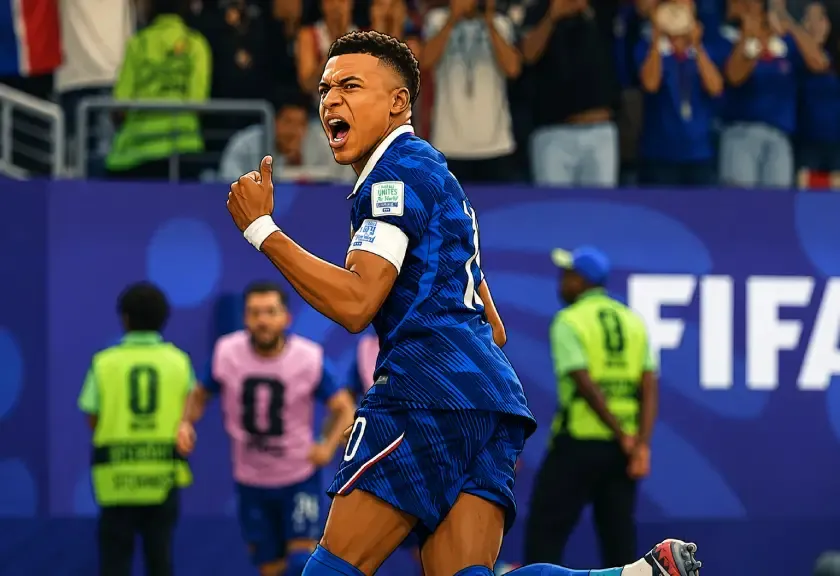
Rodri and Jude Bellingham occupy the midfield base, with Lionel Messi operating as playmaker behind the front three of Kylian Mbappé, Erling Haaland and Leandro Trossard.
However, this data-driven approach is not the only standard used to select the tournament's standout players.
ESPN FC combines hard statistics with match context. A player's impact during decisive high-stakes fixtures, and their overall contribution to their team's entire tournament run are also weighted as critical evaluation factors.
The Athletic meanwhile prioritises tactical balance above all else: assessing whether the eleven selected players would actually function as a cohesive, functional team unit on the pitch.
British broadcaster talkSPORT further demonstrated that room for subjective interpretation always remains. Two of their resident senior pundits each produced Team of the Tournament lineups that did not fully align.
One pundit named Harry Kane as starting centre forward, while the other selected Erling Haaland for the position. Disagreements also emerged across multiple other field positions.
These conflicting methodologies mean there will never exist a single starting eleven that receives universal agreement. Statistics will produce one outcome, tactical analysis will yield another, while the personal experience and perspective of individual observers will introduce entirely distinct viewpoints.
This very debate forms the core theme of the special 2026 World Cup edition of the ITSMe Podcast.
Hosted by Gilang Respaty and Yatna from the ITSMe Studio in Sentul, Bogor, this episode features two respected national football analysts Ronny Pangemanan and Kesit Budi Handoyo. Both followed every match of the full tournament, yet hold fundamentally different approaches when constructing their ideal starting eleven.
Will their selections align with Opta's statistics-driven methodology, lean closer to the editorial perspective of international sports media, or present an entirely original lineup? That question sits at the heart of the ITSMe Podcast discussion.