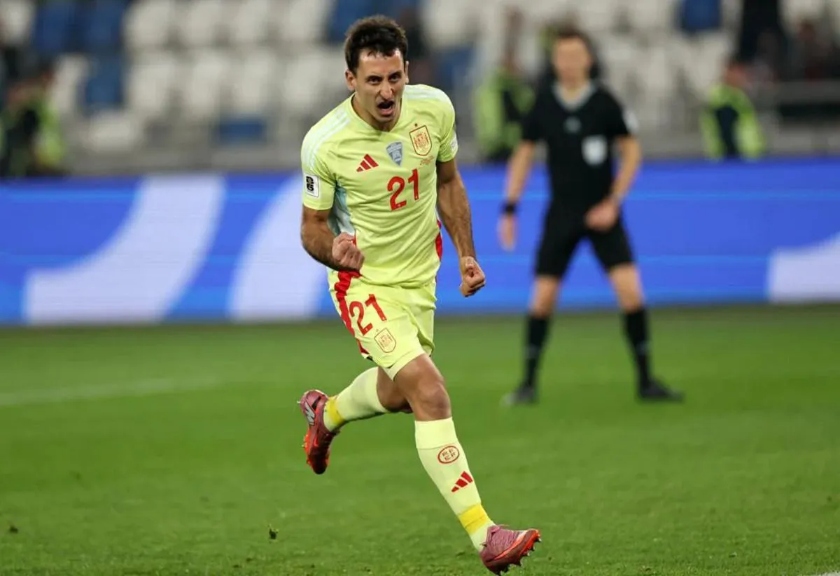

Sentul, Bogor - Spain became the first team to secure a place in the 2026 World Cup final after defeating France 2-0 in the semi-final. This victory was not only decided by the two goals scored by Mikel Oyarzabal from the penalty spot and Pedro Porro in the second half.
More than that, La Roja demonstrated how structured game organisation, spatial control, and tactical discipline can neutralise individual brilliance on football's biggest global stage.
Throughout the match, Spain controlled the game tempo and gave France almost no opportunity to execute their own football identity. France's forward line consisting of Kylian Mbappe, Ousmane Dembele, and Michael Olise was starved of space, leaving them unable to create any meaningful threats.
READ ALSO
Many Paths to the 2026 World Cup Round of 32: Who Will Qualify, Who Will Stumble?
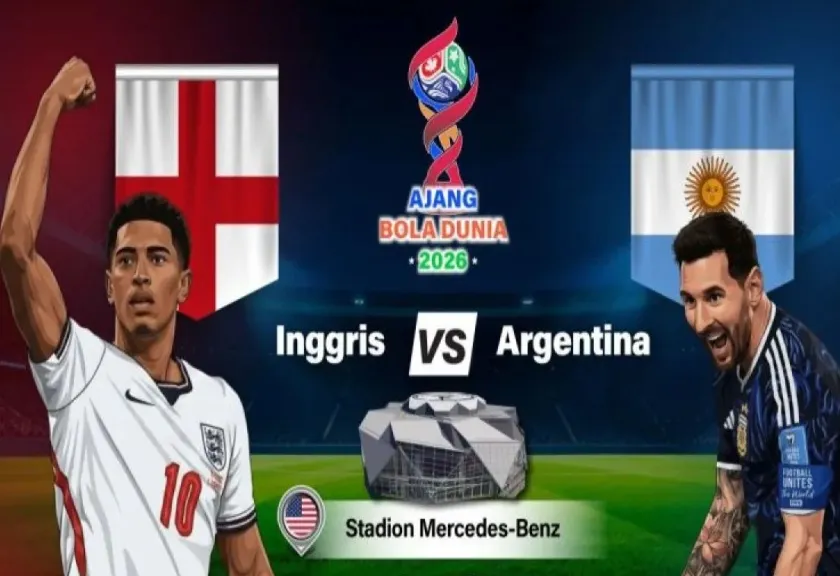
England vs Argentina: Who Will Reach the 2026 World Cup Final? Analysis by Ronny Pangemanan & Kesit
The pitch condition at the 2026 FIFA World Cup Final venue has come under scrutiny, here is the expert analysis regarding this matter.
As a result, Spain recorded their sixth clean sheet from seven matches in the tournament, while cementing their status as the side with the most solid defence at the 2026 World Cup.
This success was built on midfield dominance. Rodri once again performed his role as the central ball distributor and tempo regulator, while Dani Olmo repeatedly found openings in the half-space to connect the midfield and forward lines.
Immediately after losing possession, Spanish players launched an instant counter-press, leaving France almost completely unable to execute the fast transitions that have long been the core strength of Didier Deschamps' squad.
Equally notable, Spain did not assign an individual marker for Mbappe. Instead, they cut off passing supply lines right from the build-up phase, forcing the French captain to receive the ball far from dangerous attacking areas.
This approach rendered France's individual quality ineffective, while Spain's game structure remained intact for the full 90 minutes.
Analysis of Spain's success is one of the main topics on the ITSMe Podcast, featuring football analysts Ronny Pangemanan and Yusuf Kurniawan (Bung Yuke).
Hosted by Gilang Respaty and Yatna from ITSMe Studio in Sentul, Bogor, the two guests break down how the balance between ball possession, collective pressing, and positional discipline has established Spain as the most complete team in this tournament.
Attention now shifts to the second semi-final fixture between England and Argentina, the match that will determine Spain's opponent for the tournament final.
This match is expected to be a clash of two distinct modern football approaches. Thomas Tuchel's England system relies on high pressing, off-ball intensity, and rapid vertical transitions.
Meanwhile, Argentina prioritise game tempo control orchestrated through Lionel Messi, supported by the mobility of Julián Álvarez and the inter-line combination play that has become the signature of Lionel Scaloni's setup.
For this reason, this duel is widely believed will not be decided solely by individual performances from Lionel Messi or Jude Bellingham. The match key instead lies in the midfield, particularly the battle for Zone 14 just outside the penalty box; the area recognised as the source of the most dangerous goalscoring opportunities in modern football.
The team that can win transition duels, control space, and impose their own game tempo is projected to be the side that will join Spain in the 2026 World Cup final.



![Arsip foto - Konser realitas virtual grup K-pop BTS]](https://cdn.itsme.co.id/library/2/7/0/2/arsip-foto-konser-realitas-virtual-grup-k-pop-bts_840x576.webp)