
From Kota Tua to Lawang Sewu, 5 Historical Places in Java That Have Now Become Favorite Tourist Destinations

Source: Kemenpar
Traveling nowadays is no longer only about enjoying natural scenery or hunting for local food. More and more tourists are interested in visiting historical destinations to learn about the nation's journey while gaining a more meaningful vacation experience. On the island of Java, a number of historical buildings have been transformed into educational tourist attractions.
Indonesia holds an extremely long historical heritage, spanning from the era of ancient kingdoms, colonial rule, all the way to the struggle to defend national independence. Many historical legacy structures have remained standing strong and are continuously preserved so they can be enjoyed by present generations.
This repurposing not only extends the lifespan of cultural heritage, but also creates more engaging learning spaces. Visitors can directly witness historical traces through museum collections, original architecture, and important stories that once took place at these locations.
READ ALSO
The only one from Indonesia, Jakarta's House of Tugu Makes World’s Greatest Places 2026.
Coffee Shop Proposed at Sukarno's Exile House to Attract Younger Generation
Exploring Wotawati, a Classic Village in Gunung Kidul that Feels Like Stepping Back into the Royal Era
Below are five historical sites in Java that have now become educational tourist destinations:
1. Jakarta Old Town
The Jakarta Old Town district is one of the most famous historical tourism icons in Indonesia. This area was once the administrative and trade centre of Batavia during the Dutch colonial period.
Today, the revitalized European-style buildings create an authentic classic atmosphere. Tourists can visit the Fatahillah Museum, Bank Indonesia Museum, Wayang Puppet Museum, or even cycle around the area on traditional vintage bicycles.
Aside from offering a nostalgic experience, Old Town also serves as a space to learn about Jakarta's development, from the colonial era up to its current status as Indonesia's capital city.
2. Hotel Majapahit, Surabaya
Located in Surabaya, Hotel Majapahit is one of the historical buildings that holds a critical story of the nation's struggle. First built in 1910 under the name L.M.S Hotel, this establishment was renamed Hotel Oranje, Hotel Yamato, and Hotel Hoteru before finally receiving its current name Hotel Majapahit.
This building is remembered as the site where the blue section of the Dutch flag was torn off to create the Indonesian Red and White flag on 19 September 1945, an event that became a global symbol of Indonesia's fight to defend its independence.
Hotel Majapahit is now designated as a National Cultural Heritage Building. Tourists can join guided tours lasting approximately 30 to 40 minutes to learn about the hotel's history, admire its architectural beauty, and hear stories about important historical figures who once stayed here.
3. Vredeburg Fortress Museum, Yogyakarta
Vredeburg Fortress was originally constructed by the Dutch colonial government as a defensive fort, as well as an outpost to monitor activities within the Yogyakarta Sultanate.
Following Indonesian independence, this fortress was converted into a museum that showcases the full history of the nation's independence struggle. Various dioramas, documentary collections, and historical artefacts allow visitors to understand the long process that led to Indonesia's independence.
It is no surprise that Vredeburg Fortress Museum is one of the most popular educational destinations for both students and tourists visiting Yogyakarta.
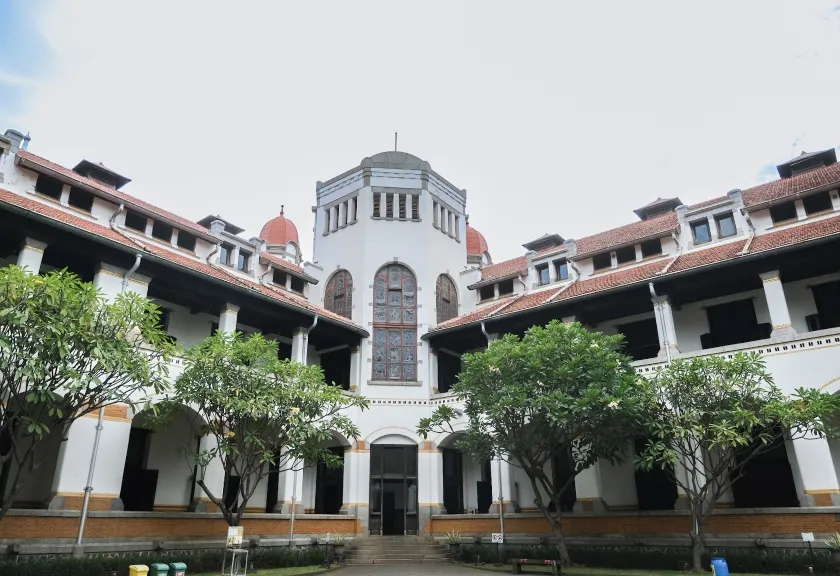
4. Lawang Sewu, Semarang
Lawang Sewu is widely known as one of the iconic historical tourism sites in Central Java. This building, which previously served as the head office of the Dutch East Indies railway company, features grand European-style architecture. The structure bore direct witness to the Five Day Battle of Semarang.
After undergoing full restoration, Lawang Sewu is now open to the public as a historical tourist attraction as well as a museum documenting the development of Indonesia's railway industry.
As its nickname suggests, Lawang Sewu translates to 'a thousand doors', named for the large number of doors and windows across the building. That said, the actual total number of doors here is not one thousand, but 928.
5. Gondang Winangoen Sugar Museum, Klaten
Klaten is home to the only dedicated sugar museum in Southeast Asia. The Gondang Winangoen Sugar Factory complex was established in 1860. This site originally operated as a sugar processing factory owned by the Dutch company NV Klatensche Cultuur Maatschappij.
After Indonesian independence, management was transferred to the government through state-owned plantation enterprises. The original building, vintage machinery, and all production equipment have been fully retained as part of the museum exhibit.
Today, this site functions as an educational tourist destination that introduces the history of Indonesia's sugar industry, while also demonstrating how sugar processing technology has developed over time.









Belum ada komentar. Jadilah yang pertama!