
Air Travel Revolution: Document-Free International Travel Soon to Become Reality

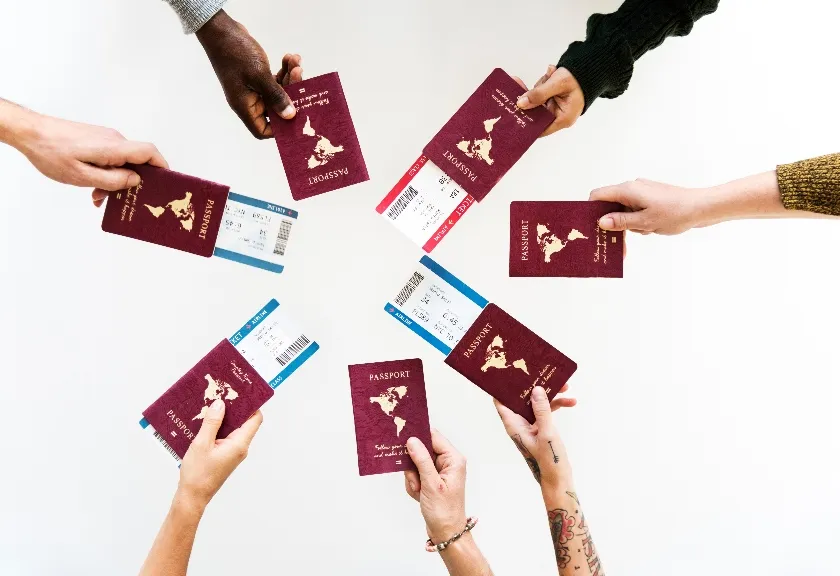
Source: Envato
Global air travel stands on the brink of a major transformation. A change that will transform How we explore the world, from long airport queues to nearly seamless cross-border experiences.
According to the International Air Transport Association (IATA), travelers from South Africa and various parts of the world may soon be able to travel without needing to carry a physical passport or boarding pass.
Trials of the digital identity concept involve airlines, airports, governments, and technology providers in Europe and Asia-Pacific regions.
READ ALSO
2027 School Holidays: Tourism Destination Operators Are Requested To Prepare For The Upcoming Surge In Tourist Numbers.
Five Countries Dominate Tourist Arrivals to Indonesia Throughout 2025
MoT Targets Tourists from Macau: Indonesia's Promotion Strategy in East Asia
These trials demonstrate that contactless, biometric-based international travel is no longer just a futuristic idea. Technically, this system is already feasible.
Under this scheme, travelers only need to use a digital version of their passport stored on their smartphones.
Identity is then verified via facial recognition or other biometric technologies at various points throughout the airport.
This means travelers no longer have to repeatedly show physical documents at every stage of the journey, from check-in to boarding.
IATA explains that this digital identity system can support integrated travel, even when involving different airlines and diverse digital identity platforms.
Some solutions being tested include Digital ID in Apple Wallet for US passport holders, Google ID Pass for UK and US passport holders, and national systems like India's Digi Yatra.
All these tests are built upon IATA's One ID standard, Contactless Travel Directory, and international standards developed by ISO, OpenID, and W3C.
“We have proven that digital identity works for international travel securely and efficiently,” said IATA Director General Willie Walsh.
“To deliver the benefits of this important modernization to travelers, governments must accelerate efforts to issue and accept Digital Travel Credentials (DTCs), the secure digital version of a passport,” he continued.
According to Walsh, the benefits of this system are significant, ranging from enhanced security to smoother and more efficient journeys.
Trials also showed passengers can securely share necessary information before departure, naturally with their consent.
This allows checks to be processed even before they arrive at the airport, reducing queues and minimizing repeated document inspections.
Biometric verification has proven capable of replacing manual checks at various airport points, creating a Travel Experience that IATA calls “tap-and-go”.
“By sharing identity data in advance, checks can be completed faster, reducing the need for document checks at the airport and cutting queues,” said Walsh.
This move towards digital travel documents also aligns with initiatives previously proposed by the International Civil Aviation Organization (ICAO).
The technology is deemed increasingly mature and ready for widespread implementation.
SITA's Director of Industry and Innovation, Andy Smith, described this development as an exciting and long-awaited journey.
“It's a very exciting journey and one we've been on for a long time,” said Andy Smith.
“What we are achieving now is that travelers have certainty, they can move through the airport, cross borders, smoothly without having to show a passport or boarding pass,” he added.
Smith also emphasized that most of the travel process can be completed even before the Traveler departs for the airport.
“Before you leave for the airport, you know all the Airline processes are complete,” he said.
“You know you'll have a smooth experience at the airport, and more importantly, upon arrival at your destination, you'll get a much simpler arrival process.”
However, IATA reminds that the option based on physical documents must still be available, to ensure travel remains inclusive for everyone.
In the future, travel may no longer be about showing documents at every gate, but rather about how technology works quietly behind the scenes.
Source: businesstech.co.za









Belum ada komentar. Jadilah yang pertama!