

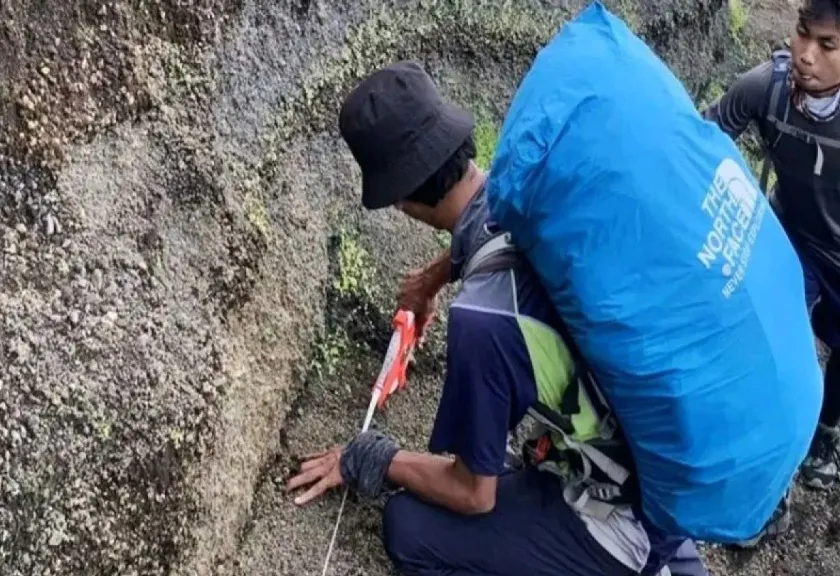
Source: Antara/HO-TNGR NTB
The hiking trail to the summit of Mount Rinjani will reopen. For many climbers, this decision is good news and also marks one of Indonesia's most dramatic landscapes being ready to welcome a new season with enhanced safety and Conservation standards.
The Mount Rinjani National Park Office (Balai Taman Nasional Gunung Rinjani - TNGR) confirmed the reopening of climbing activities on March 28, 2026, after being closed since January 1, 2026, due to Extreme Weather conditions posing risks to safety.
"The plan is to reopen climbing on the upcoming date of March 28, 2026," said Head of the TNGR Office Budhy Kurniawan in a statement in Mataram on Tuesday.
The main reason for the reopening is not solely the improving season. According to Budhy, this decision was made after a thorough evaluation of the area's conditions, supporting facilities, and the readiness of human resources to face the Tourist Visit season.
Since the closure period, the TNGR Office has enhanced aspects of safety, conservation, and destination governance by involving local governments and surrounding communities.
This approach forms the new foundation for managing Rinjani, being more collaborative and long-term oriented.
This transformation is also evident in the implementation of technology. The TNGR Office activated RFID wristbands for climbers, personal beacons to monitor positions, built a command center, integrated radio communication, and implemented a digital-based zero waste system.
These steps are designed to create a safer Trekking Experience while minimizing the impact on the mountain ecosystem.
The Governor of West Nusa Tenggara, Lalu Muhamad Iqbal, fully supports the reopening of the hiking trail with a more coordinated management direction.
"The management direction for Mount Rinjani is not towards mass Tourism, but rather exclusive, high-quality, and conservation-oriented trekking. A world-class experience must go hand in hand with ecosystem protection," he stated.
Iqbal also emphasized the importance of coordination between the TNGR Office, the provincial government, district governments, and surrounding communities, especially in aspects of safety and conservation.
He cited the handling of tourist accidents as an example, which requires cross-party collaboration, including the vertical rescue initiative as a form of shared responsibility.
"Mount Rinjani is a symbol of life for the community. We hope the innovations of the TNGR Office in environmental and tourism governance will be realized soon," said Iqbal.
Economically, the reopening of climbing has a significant impact. Throughout 2025, Non-Tax State Revenue (PNBP) from the Mount Rinjani Tourism area reached Rp25.92 billion, with a total money circulation of Rp182.05 billion.
The number of trekking Tourist Visits was recorded at 80,214 people, consisting of 43,236 Foreign Tourists and 36,978 Domestic Tourists.
Meanwhile, non-trekking visits reached 52,108 people, dominated by 51,311 Domestic Tourists and 797 Foreign Tourists.









Belum ada komentar. Jadilah yang pertama!