
Unique Travel, Living Without Fixed Address in Mongolian Steppes

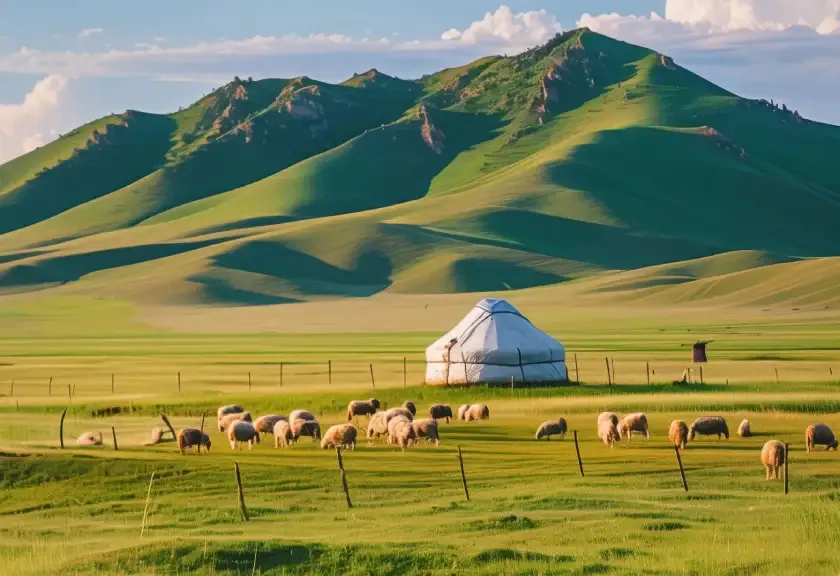
Source: Freepik
In Mongolia, homes don't always stand in one spot; they can be dismantled in the morning, moved during the day, and reassembled before sunset. Across the nearly boundless steppes, mobility isn't an alternative Lifestyle, but a necessity. Here, Mongolian nomadic life persists as a living system that endures to this day.
Mongolia is often called the Land of the Blue Sky. This isn't empty Tourism Promotion. Data from Mongolia's national Tourism agency shows the country enjoys over 250 sunny days annually. That vast blue sky serves as a natural roof for expansive grasslands that have sustained herders for centuries.
Unlike many nations where populations concentrate in cities, Mongolia retains a significant proportion of people who live off livestock and migrate seasonally. The World Bank and National Statistical Office of Mongolia report about one-quarter to one-third of the population depends on nomadic herding. They raise horses, sheep, goats, cattle, and camels, moving between pastures to preserve both nature and livestock.
READ ALSO
5 Hidden European Islands Perfect for Solitude-Seeking Travelers
Bathing in Parbubu Tarutung Soda Water, a Rare Destination That Absolutely Deserves a Spot on Every Traveler's Wishlist
Uzbekistan Welcomes Hotel Kampoeng Indonesia in Imam Bukhari Area.
Their dwellings are called ger or yurt. Circular in shape with wooden frames covered in thick sheep-wool felt, this design isn't accidental. Ger structures withstand Mongolia's extreme climate, where winter temperatures plunge far below zero while summers remain scorching.
UNESCO has recognized Mongolian ger culture and nomadic life as Cultural Heritage, acknowledging their centrality to local identity.
Nomadic life means constant negotiation with nature. No digital calendars exist—only weather patterns, grass conditions, and livestock behavior guide decisions. When pastures thin or winter approaches, relocation begins. Here, nature isn't an enemy to conquer but a partner to understand.
For travelers, Mongolia offers a rare modern experience: joining this rhythm. Many nomadic families now welcome tourists into their ger—not as spectators but guests. Visitors live together, share meals, and participate in daily activities from herding and milking to gathering around the stove at night.
Sustainable Tourism organizations emphasize this authenticity isn't staged. Tourists witness real daily life, not cultural performances. This makes Mongolian steppe journeys deeply personal. No rigid schedules, no crowds, barely any technology—just distance, time, and awareness that humans are but small fragments of vast landscapes.
In our fast-paced, crowded world, Mongolian nomadism offers another perspective on movement: that relocation doesn't mean rootlessness, and home can be open spaces as wide as horizons. For Travelers, Mongolia isn't merely a destination. It's a life lesson arriving without road signs.






Belum ada komentar. Jadilah yang pertama!