
Black Oil Waste on Bintan's East Coast Threatens Marine Tourism

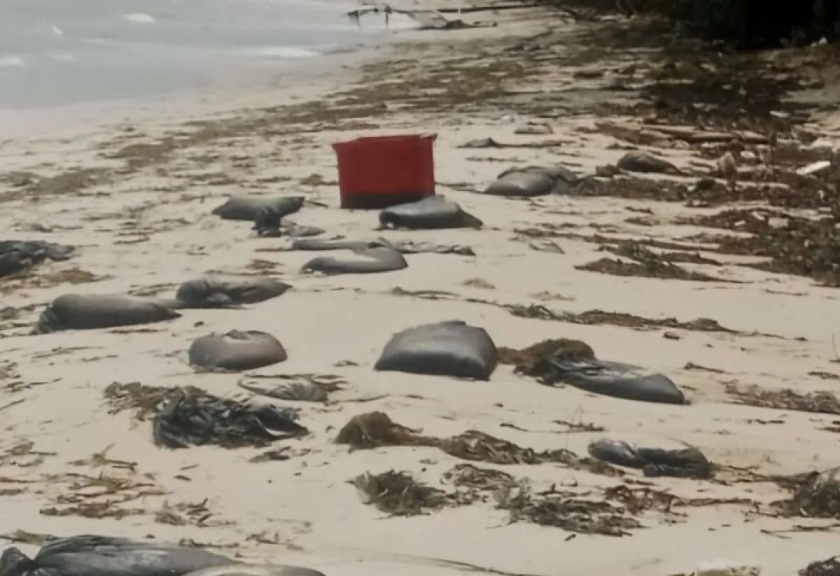
Source: Between/Ogen
The beaches on the eastern side of Bintan Island have long been known as tropical landscapes with rows of resorts facing the Natuna Sea directly. However, in recent days, that landscape has been tainted by black oil sludge washed ashore with the currents, disturbing not only fishermen's livelihoods but also coastal Tourism activities.
Chairman of the Indonesian Traditional Fishermen's Union (KNTI) in Bintan Regency, Syukur Harianto, stated that oil waste pollution in the waters has disrupted fishermen's catch operations and the tourism sector.
Hundreds of sacks of black oil made from jute material were found stranded across coastal areas and the Bintan Sea, covering Kawal, Teluk Bakau, Malang Rapat, Trikora, and Ujung Berakit – regions that have long served as prime Beach Tourism routes.
"This situation could cause fishing gear to be contaminated with black oil and fish catches to be polluted with chemicals. Consequently, fish consumed by residents may lead to stunting or malnutrition," Harianto said in Bintan on Tuesday.
Beyond affecting the sea as a living space, Harianto emphasized that the black oil sludge also disrupts tourist attractions along Bintan's eastern coastline.
This condition potentially deters tourists from visiting Bintan, especially for beach activities, due to concerns about direct contact with the waste sludge.
"Automatically, hotels and resorts in Bintan face the threat of dwindling visitors," he stated.
For regions relying partially on Marine Tourism for their economy, this pollution isn't merely an environmental issue but a direct threat to tourism sustainability.
Therefore, Harianto hopes the government and stakeholders will promptly seek solutions, at least through joint efforts for sea and beach cleanup.
KNTI also urges the government to address the recurring black oil pollution happening almost yearly without concrete long-term solutions.
"We hope authorities will identify and strictly penalize those dumping black oil in Bintan's waters," he urged.
According to KNTI, the black oil is suspected to originate from ship engine waste, including used oil and diesel.
Ships passing through Indonesian waters are suspected of intentionally stuffing oil waste into jute sacks before dumping them at sea, where currents carry them toward Bintan's waters. This method has occurred for over a decade.
To prevent recurrence, KNTI advocates enhanced sea patrols to curb illegal oil waste dumping, particularly around Bintan.
Acting Head of the Class II Tanjung Uban Marine and Coast Guard Base (PLP), Alfaizul, declared readiness to deploy personnel for coordinated black oil cleanup in Bintan's waters.
"Today, a cross-sectoral meeting involving the Ministry of Environment and Forestry was held. Joint measures to handle this black oil have been agreed upon," he said.
However, maritime surveillance faces challenges. Alfaizul revealed routine patrols are often hindered by Extreme Weather conditions, which ships exploit to dump waste.









Belum ada komentar. Jadilah yang pertama!