
10 Future Trains: When Super-Speed Travel Becomes a New Tourist Experience

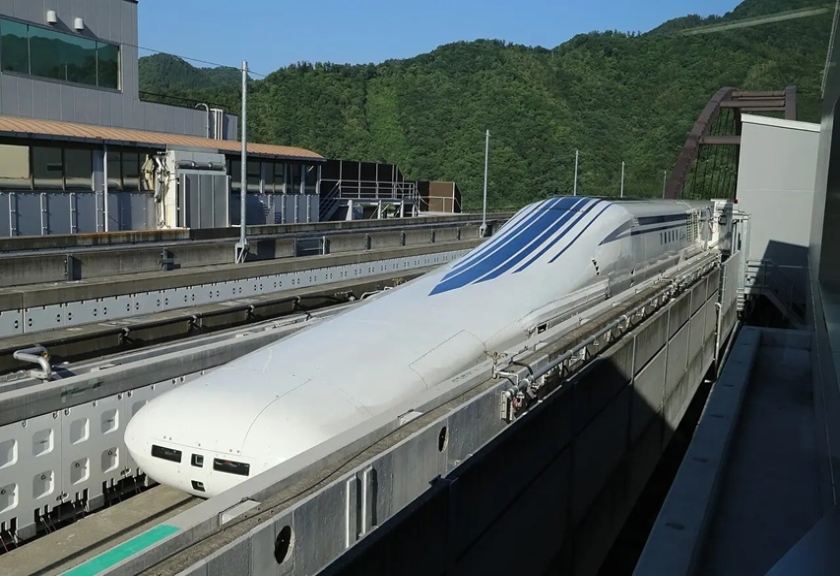
Source: Wikimedia Commons
In many countries, railways are no longer just transportation routes but have transformed into laboratories for the future. From Japan to the United States, innovations like maglev, automation, and high-speed pods offer a glimpse into how humans will move between cities in the coming decades.
For travelers, this isn't just about speed, but also about experiencing the world in a quieter, greener, and far more efficient way.
Here are 10 futuristic high-speed trains cited from wionews.com:
READ ALSO
This Country Builds New Generation World's Second Fastest High-Speed Rail Project
Exploring Java aboard KA Mataram: A Different Way to Enjoy the Weekend
KA Pangandaran Becomes Holiday Choice, Railway Tourism Trend Grows Popular
Japan's SCMaglev - Gliding on Magnets, Reaching 600 km/h
In Japan, the future of travel can be heard in the gentle hum of the SCMaglev, a magnetic levitation train that has reached speeds exceeding 600 km/h in tests.
Relying on superconducting magnets, this train is designed to connect Tokyo and Nagoya by 2030, drastically reducing travel time.
If realized, this frictionless journey will become one of the world's most astonishing technological attractions.
Hyperloop - Traveling in a Vacuum Tube Over 1,000 km/h
The Hyperloop concept offers the most futuristic vision: capsules speeding through low-pressure tubes with minimal air resistance at speeds over 1,000 km/h.
Though still in the prototype stage, companies like Virgin Hyperloop continue to develop this technology. If successful, intercity travel could transform into an aircraft-speed gliding sensation, yet far more efficient and eco-friendly.
India's Vande Bharat 4.0 - Comfort and Safety on Modern Tracks

Source: Wikimedia Commons
India is preparing to launch Vande Bharat 4.0 within the next 18 months. With speeds up to 200 km/h, this new-generation train features ergonomic seats, enhanced facilities, and the Kavach automatic safety system.
For tourists, this means more comfortable long-distance travel without sacrificing speed.
China's Fuxing Hao - A Symphony of Speed and Energy Efficiency
In China, the Fuxing Hao operates steadily at 350 km/h. Its latest version prioritizes noise reduction, energy savings, and improved comfort.

Source: Wikimedia Commons
The expanding Beijing-Shanghai route makes this train an ideal choice for travelers wanting to save time while retaining the essence of an overland journey.
China's CRC Maglev - The Semi-Underground Revolution
China is developing the CRC Maglev with speeds exceeding 400 km/h. Combining lightweight materials and levitation technology, this semi-underground line offers a smooth journey as if silently piercing through space.
Japan's L0 Series - The 602 km/h Record Holder
The L0 Series made history by reaching 602 km/h in trials. Though not yet in commercial operation, its development strengthens Japan's pioneering maglev safety and technology foundations.
Poland's NEVOMO - Maglev Without New Tracks
In Europe, Poland surprises the world with its NEVOMO Passive Maglev innovation, enabling trains to levitate on traditional tracks. Targeting speeds up to 550 km/h, it offers a low-cost solution for transportation acceleration without building new maglev networks from scratch.
US Amtrak Next-Gen - Energy-Efficient Trains for a Vast Nation
The United States is catching up through investments in Amtrak Next-Gen Trains. Designed for greater efficiency and environmental friendliness, these new trains aim to compete with international models while providing a more comfortable travel experience on America's long routes.
Brightline 2 - Connecting Major Cities at 240 km/h
Also in the US, the Brightline 2 project targets speeds nearing 240 km/h. Its ambition is to strengthen connectivity between major cities, offering travelers a new way to explore metropolitan areas without the stress of road travel.
Europe's Alto Metrò - Driverless Urban Transit
In European city centers, innovation is equally compelling. Alto Metrò, an automated metro system, combines AI and IoT to manage operations in real-time.
For tourists, this technology delivers smoother, safer, and more efficient urban travel while showcasing how future smart cities might operate.
High-Speed Travel as a New Tourist Destination
From vacuum pods to levitating trains, this transportation revolution isn't just about moving from point A to B.
Each innovation creates new opportunities for travelers to experience more personal adventures: watching landscapes transform in seconds, gliding silently, or feeling technology once confined to science fiction.
In the era of future railways, the journey is no longer just a route—it's the experience itself.









Belum ada komentar. Jadilah yang pertama!