
Uzbekistan Targets Indonesia as Tourist Market with Direct Flights

Source: Antara Foto/Asri Mayang Sari
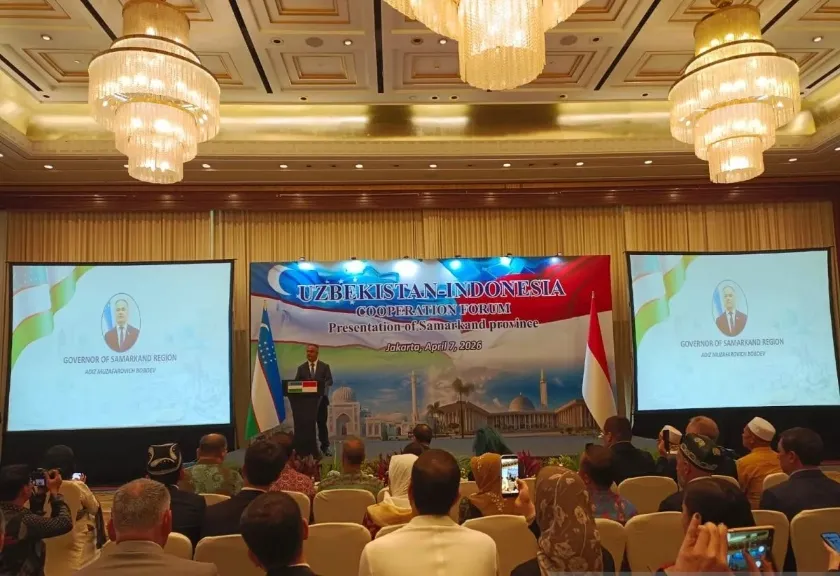
Samarkand Region Governor Adiz Boboev emphasized the importance of Indonesia-Uzbekistan tourism cooperation, a move potentially reshaping Asia's Travel Tourism landscape. The focus narrowed to one crucial point: direct flights.
For Samarkand, the historic Silk Road city, air connectivity is not just access, but a gateway to increased Tourist Visits and broader economic opportunities.
Adiz Boboev affirmed this policy direction during his delegation's visit to Jakarta.
READ ALSO
Uzbekistan Tourism: Discovering the Beauty of Silk Road Historic Cities
Uzbekistan Welcomes Hotel Kampoeng Indonesia in Imam Bukhari Area.
Exploring Spirituality and Culture at Prambanan Shiva Festival 2026
“Among all agendas discussed, establishing direct flights became one of the Samarkand delegation's top priorities,” he stated in his address at the Indonesia-Uzbekistan Partnership Forum: Presentation of Samarkand Province in Jakarta on Tuesday.
This statement signals Uzbekistan's seriousness in building a new bridge with Indonesia.
Direct air routes are believed capable of cutting geographical distance while opening opportunities to explore previously remote destinations.
In the Samarkand government's view, Indonesia is not merely a tourism market, but a strategic partner due to shared values.
Cultural and religious similarities form the foundation strengthening the belief that this cooperation can develop sustainably.
“In efforts to strengthen bilateral relations, Samarkand considers it vital to produce concrete steps that can provide tangible benefits for both sides, particularly in tourism and Business sectors,” he said.
This ambition doesn't stop at connectivity. Samarkand is also projected as a leading Tourist Destination in Asia, including for Indonesian Tourists.
To achieve this goal, forming a joint working group is one strategic step.
This collaboration is expected to map potential and open opportunities for more concrete and targeted cross-sectoral cooperation.
Indonesia as Halal Tourism Reference
Meanwhile, Uzbekistan views Indonesia as a reference in developing halal tourism.
Indonesia's experience in managing Muslim-Friendly Destinations is an added value to be adopted, while also strengthening appeal for global tourists.
“Cooperation with Indonesian companies is also anticipated, especially in Hotel Management and tourism infrastructure development. Both sides are also encouraged to enhance collaboration in promoting their respective tourism potentials,” he stated.
More than just a destination, Samarkand is positioned as Uzbekistan's main tourism gateway.
This city is not only a spiritual center but also a crucial node in the history of Islamic civilization, continually attracting tourist interest.
The forum held in Jakarta also opened space for broader cooperation.
Investment opportunities up to the signing of memoranda of understanding in economic and education sectors signal that bilateral relations are moving deeper.
The presence of travel agents and airlines at the forum further emphasized the direction of this cooperation.
Tourism no longer stands alone, but is part of an ecosystem involving various supporting sectors.









Belum ada komentar. Jadilah yang pertama!